
In the ever-evolving landscape of American healthcare, few phrases have ignited the internet quite like the recent explosion of searches for TrumpRx. It is the top trend across search engines, a topic dominating social media feeds, and the newest focal point in the ongoing battle against skyrocketing healthcare costs.
As the second Trump administration navigates its sophomore year, the launch and the accompanying digital chaos of this new pharmaceutical initiative has captivated the nation. Americans, weary of inflated copays and opaque pricing structures, are furiously typing variations of the name into their browsers: from “trump rx” and “trumprx list of drugs” to a confusing array of potential web addresses like “trumprx.gov” and “trump rx.com.”
But what exactly is TrumpRx? Is it a government program, a private discount card, or a political maneuver? Is it a legitimate rival to established giants like GoodRx? And, perhaps most urgently, can it actually help you afford high-demand medications like Zepbound?
This comprehensive guide dives deep into the phenomenon of TrumpRx, separating the rhetoric from the reality, navigating the website confusion, and analyzing what this initiative means for your wallet and your medicine cabinet.
The Genesis of TrumpRx: Disruption by Design
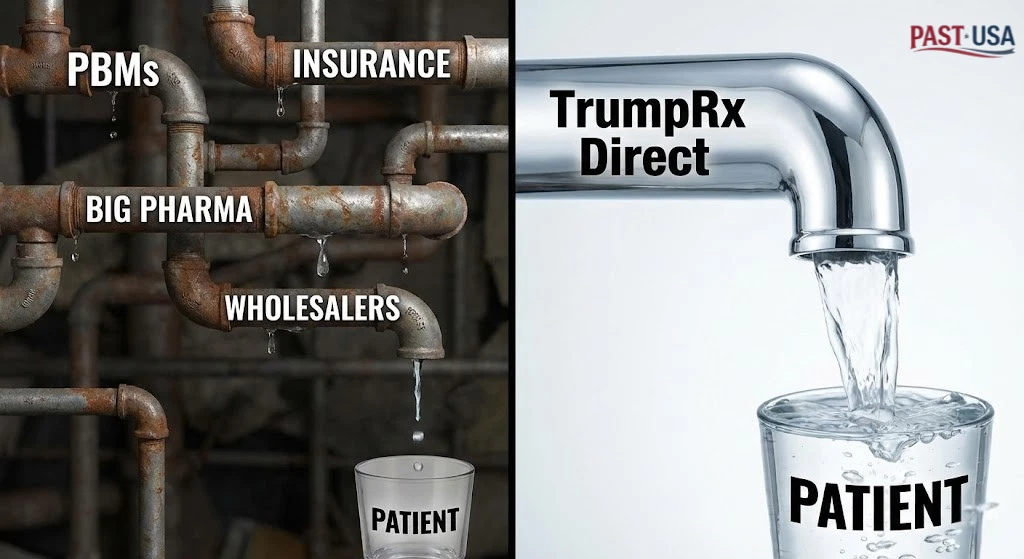
To understand the sudden surge of interest in TrumpRx, we must understand the climate of early 2026. Despite numerous legislative attempts over the past decade, prescription drug prices remain a primary financial burden for millions of American households. The traditional model dominated by Pharmaceutical Benefit Managers (PBMs), insurance bureaucracy, and Big Pharma lobbying has proven distressingly resilient to change.
Enter the concept of TrumpRx. Positioned by the administration as the ultimate disruptor, the initiative was teased throughout late 2025 as a “direct-to-patient” revolution. The stated goal was lofty but simple: bypass the middlemen, leverage federal negotiating power (and executive pressure), and deliver medications almost at cost to the American consumer, wrapped in unmistakable branding.
The initiative borrows elements from successful private sector disruptors think Mark Cuban’s Cost Plus Drugs model but attempts to scale it with the brute force of federal backing. It is populism applied to pharmacy. For the average American struggling to pay for insulin or heart medication, the promise of “trump rx prices” undercutting the market is a siren song, leading to the massive search volume we see today.
The Great Website Confusion: .Gov vs. .Com
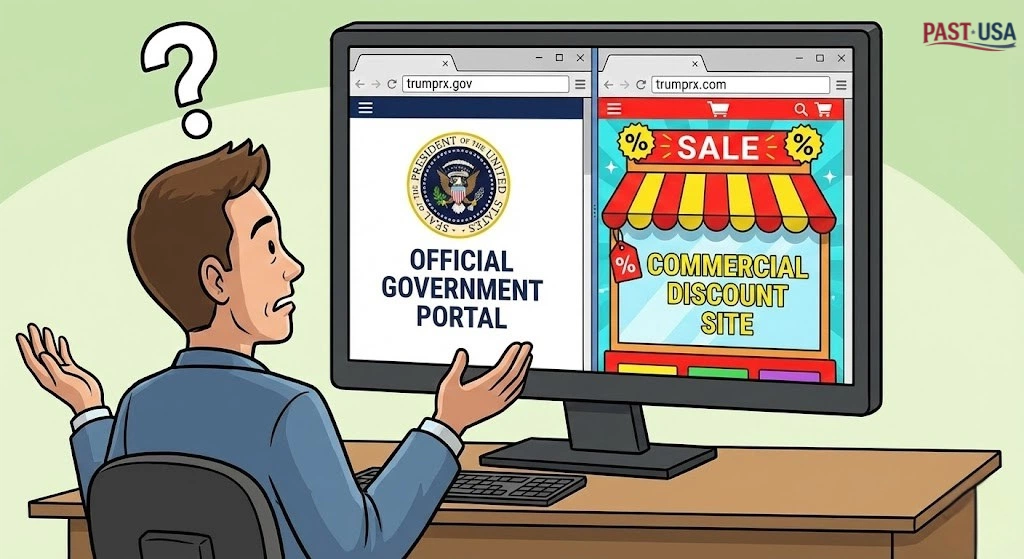
If you have attempted to find the official portal for this program, you are likely confused. You are not alone. The rollout of TrumpRx has been characterized by a digital landrush and significant confusion regarding its official online home.
Search data indicates a near-even split in users looking for an official government portal versus a commercial site.
The Quest for “trumprx.gov”
Logically, an administration-backed initiative should be housed under a .gov domain, signifying an official government entity like Medicare.gov. However, navigating to “trumprx.gov” or searching for the “trumprx.gov website” has yielded mixed results for users in early February.
Sources inside the Beltway suggest an internal tug-of-war. Some advisors pushed for the legitimacy of a .gov site, integrating it with CMS (Centers for Medicare & Medicaid Services). Others argued that the bureaucracy of a .gov launch was too slow for the President’s desired timeline, pushing instead for a public-private partnership model that could launch instantly.
Currently, searches for “trump rx .gov” often redirect to general HHS (Health and Human Services) information pages about drug pricing, rather than a functional, Amazon-style pharmacy storefront adding to user frustration.
The Rise of “trumprx.com”
Nature abhors a vacuum, and the internet abhors unclaimed domains. While the government sorted out its digital strategy, private entities moved in. Searches for “trump rx.com” or the “trumprx.com website” often lead to a variety of landing pages.
Some of these are legitimate discount card aggregators trying to capitalize on the name recognition (a gray area of trademark law being tested in real-time). Others are placeholder sites. The confusion has forced the administration to issue clarifications via social media, urging users to be cautious about where they input their health information.
The takeaway for the consumer: As of this writing, extreme caution is needed. Until a unified, verified portal is firmly established and widely publicized by official White House channels, users should be wary of unofficial “trumprx.com” sites asking for payment information.
Deconstructing the Mechanism: How TrumpRx Aims to Lower Prices
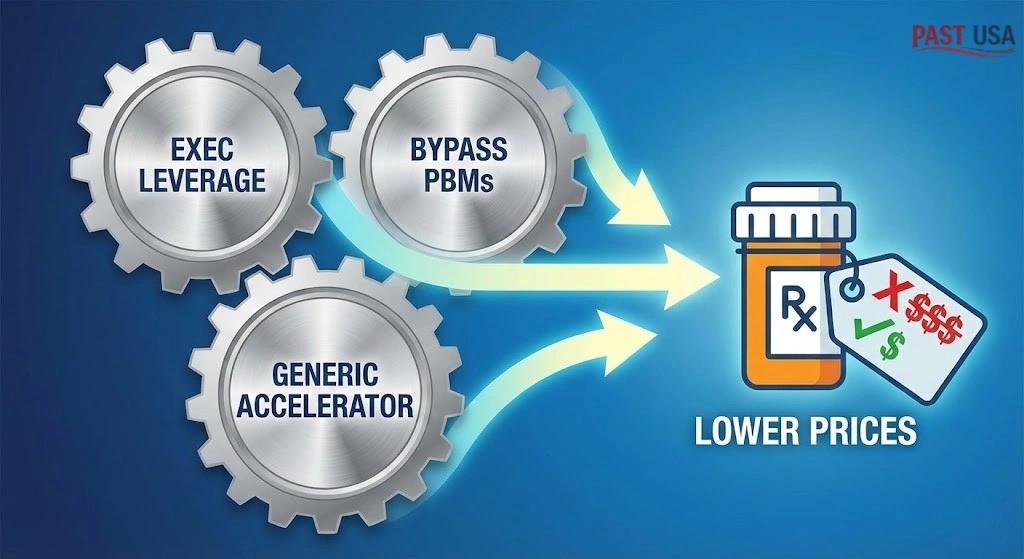
Assuming the digital dust settles, how is TrumpRx supposed to achieve the miraculously low “trump rx prices” being touted? The mechanism appears to be a hybrid approach, utilizing three main pillars:
The “Most Favored Nation” Executive Leverage
Building on policies explored in his first term, the administration is utilizing executive actions to insist that the US pays no more for certain Medicare Part B and D drugs than other developed nations. TrumpRx acts as the consumer-facing portal for these price-controlled drugs. By threatening to allow massive importation of cheaper foreign versions of the same drug, the administration is strong-arming manufacturers into lowering domestic prices offered through the TrumpRx channel.
Bypassing the PBMs
The administration has identified Pharmacy Benefit Managers as the “swamp” of the healthcare industry middlemen who negotiate rebates that rarely trickle down to the consumer at the pharmacy counter. TrumpRx aims to operate as a direct-to-consumer channel, purchasing medications directly from manufacturers (or authorized generic producers) and selling them with a transparent, fixed markup to cover operations and shipping, eliminating rebate schemes entirely.
The Generic Accelerator
A major component of the “trumprx list of drugs” involves accelerated approval for generic competitors to long-standing, expensive brand-name medications. By streamlining FDA processes for specific high-cost drug categories, TrumpRx aims to flood the market with cheaper alternatives that can be branded under its umbrella.
The Holy Grail: The “TrumpRx List of Drugs” and the Zepbound Factor
The most fevered search queries are not about the politics, but the products. Americans want to see the trumprx list of drugs. What is covered?
Early indications suggest a focus on maintenance medications for chronic conditions: high blood pressure, cholesterol, and thyroid issues. These are high-volume, low-margin generics where TrumpRx can easily undercut retail pharmacy cash prices.
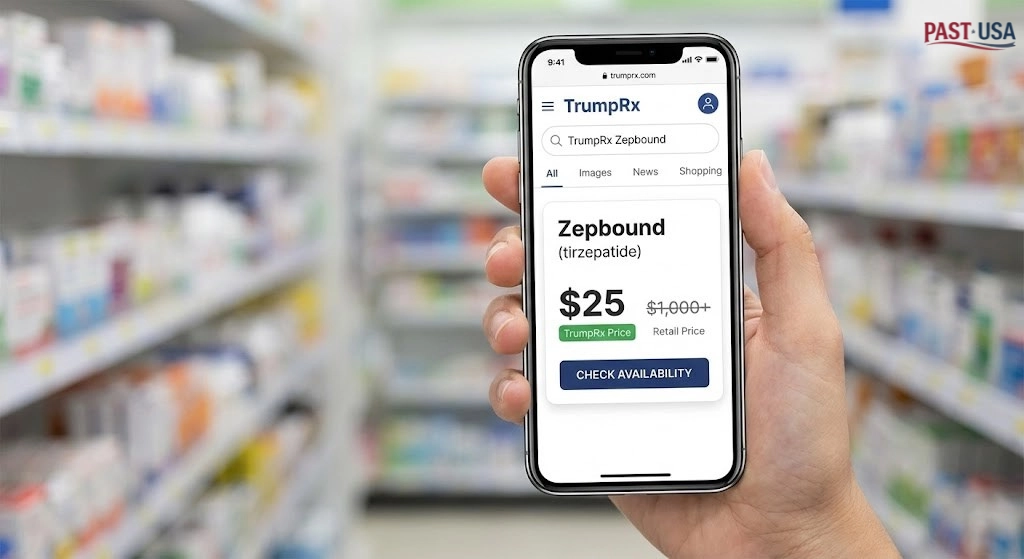
However, the internet truly broke when rumors circulated about “trumprx zepbound”.
Zepbound (tirzepatide), the highly effective weight-loss medication belonging to the GLP-1 class, has been notoriously expensive and difficult to obtain due to shortages and insurance hurdles.
The inclusion of GLP-1s like Zepbound on the TrumpRx platform is the initiative’s boldest move. The administration has reportedly used the threat of “march-in rights” (seizing patents of drugs developed with federal research funding if they aren’t reasonably priced) to force price concessions on these blockbuster weight-loss drugs.
If TrumpRx successfully offers Zepbound at a significantly reduced cash price bypassing the agonizing prior authorization process of insurance companies it would be a seismic shift in the American healthcare market and an undeniable political victory. The mere possibility has driven massive traffic to search engines.
TrumpRx vs. The World: Taking on GoodRx and Mark Cuban
TrumpRx does not exist in a vacuum. It is entering a space pioneered by the likes of GoodRx and Cost Plus Drugs. How does it compare?
TrumpRx vs. GoodRx
GoodRx revolutionized drug pricing by aggregating discount card prices, allowing consumers to shop around at local pharmacies. It doesn’t sell drugs; it provides coupons.
- The Difference: TrumpRx aims to be the seller (or the direct facilitator of the sale), not just a coupon aggregator. While GoodRx relies on existing PBM contracts to find discounts, TrumpRx seeks to bypass those contracts entirely.
- The Battle: GoodRx has a massive head start in brand recognition and app infrastructure. TrumpRx has the bully pulpit of the presidency. The battle will be determined by who has the consistently lower price at the point of sale.
TrumpRx vs. Cost Plus Drugs
Mark Cuban’s Cost Plus Drugs is the closest analog to the proposed TrumpRx model: buy direct, add a transparent 15% markup, a modest pharmacy fee, and shipping.
- The Difference: Scale and power. Mark Cuban is a billionaire; the US government is the world’s largest purchaser of healthcare. TrumpRx theoretically has leverage that Cuban can only dream of.
- The Synergy/Conflict: Interestingly, some analysts believe TrumpRx might end up partnering with existing infrastructure like Cost Plus Drugs to handle the logistics, simply slapping the MAGA branding on an existing efficient engine.
Potential Pitfalls and Controversies
No initiative of this magnitude launches without significant headwinds. Critics and healthcare economists are raising alarm bells even as search trends spike.
- The Sustainability Question: Can these prices be maintained? Critics argue that if the government forces prices too low using executive power, it could stifle pharmaceutical innovation. If Big Pharma cannot recoup R&D costs in the US market, they may reduce investment in new life-saving treatments.
- The Privacy Concern: The confusion between “trumprx.gov” and private “.com” sites raises massive HIPAA and data privacy concerns. Who owns the data of the millions of Americans signing up for these services? If it is a private-public partnership, where is the firewall between patient health data and political data operations?
The “Socialism” Paradox: It is a supreme irony that a Republican administration is championing what is essentially a government-backed intervention in the free market to set prices. While branded with populist rhetoric, free-market purists decry the move as heavy-handed government overreach, creating strange bedfellows in opposition to the plan.
Navigating the Future of TrumpRx
As we move further into 2026, the success of TrumpRx will depend on moving beyond the trending search terms and delivering tangible results at the mailbox and pharmacy counter.
The initiative has successfully captured the attention of a nation desperate for relief. The branding is potent. The inclusion of high-profile drugs like Zepbound shows an understanding of market demand.
However, the execution specifically resolving the chaotic “trumprx.gov vs. .com” landscape and ensuring a seamless user experience remains a massive hurdle.
For now, Americans are watching, searching, and hoping. Whether TrumpRx becomes a permanent fixture of the American healthcare system or a chaotic footnote in presidential history will depend on whether the administration can translate raw executive power into a reliable, affordable supply chain for the essential medications millions rely on daily. Until the digital dust settles, consumers are advised to watch official White House channels for the definitive URL and check prices carefully against established competitors. Checkout the Guide About the Winter Olympics 2026.


Pingback: The Winter Olympics (Milano Cortina 2026 ) Schedule Today