
The eternal flame has been lit in Milan, the opening speeches delivered, and the world has officially turned its eyes to Northern Italy. The wait is over. The Milano Cortina 2026 Winter Olympic Games are underway.
For sports fans across the United States, the next sixteen days will be a whirlwind of high-speed thrills on ice, gravity-defying jumps on snow, and the kind of nationalistic drama that only the Olympics can provide. But with a record number of events spread across two distinct regions of Italy, and a significant time difference to manage, keeping up with the action can feel like an endurance sport in itself.
That is why the most valuable tool in any fan’s arsenal right now is the olympics schedule.
If you are frantically searching Google right now for the “olympics schedule” or wondering which “winter olympics sports” are on tap for this weekend, you are in the right place. This comprehensive guide is designed to cut through the noise, helping American viewers navigate the sprawling, exciting, and sometimes confusing itinerary of the 2026 Games. From today’s immediate action to the must-watch gold medal finals two weeks from now, here is your essential roadmap to Milano Cortina.
The Landscape of the 2026 Games: Understanding the Flow
Before diving into today’s specific matchups, it is crucial to understand how this unique olympics schedule is constructed.
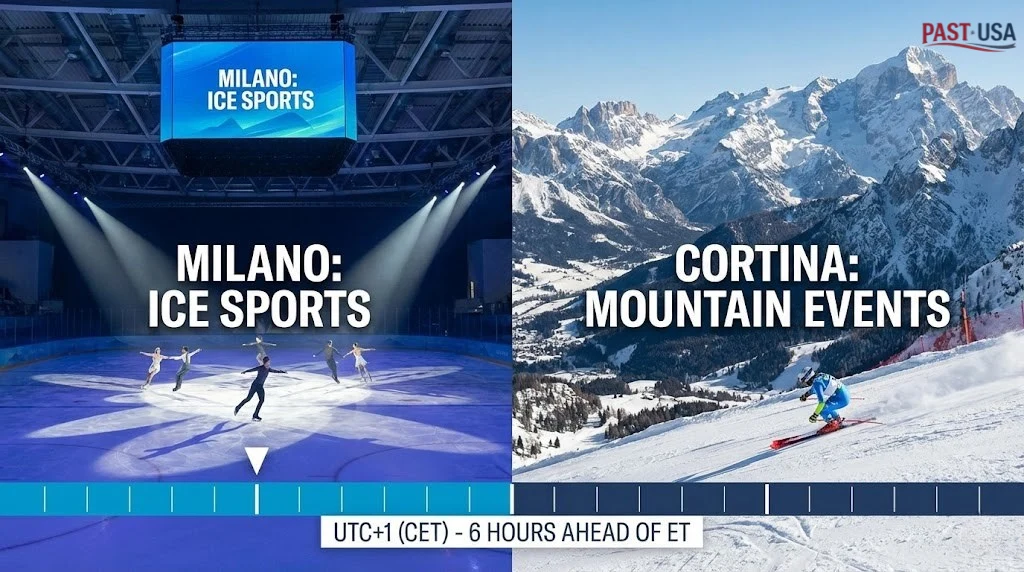
Milano Cortina 2026 is the most geographically dispersed Winter Olympics in modern history. The events are split primarily between the urban hub of Milan (ice sports like hockey, figure skating, and short track) and the rugged, stunning Dolomite mountains surrounding Cortina d’Ampezzo (alpine skiing, sliding sports, curling). Other clusters in Val di Fiemme and Valtellina host Nordic events and snowboarding.
The Time Zone Challenge for USA Viewers
For American fans, the schedule requires some mathematical gymnastics. Northern Italy is generally 6 hours ahead of Eastern Time (ET) and 9 hours ahead of Pacific Time (PT).
What does this mean for your viewing habits? It means the “live” olympics schedule today will feature many marquee events happening in the very early morning hours for US viewers. The “primetime” broadcasts on NBC will often be heavily curated replays of events that occurred while America slept. However, with streaming services like Peacock, dedicated fans can watch every second live if they are willing to set an alarm for 3:00 AM.
Winter Olympics Schedule Today: Saturday, February 7, 2026
Yesterday’s Opening Ceremony set the stage, but today is when the real battle for medals begins. Saturday, February 7th, is the first full day of competition, traditionally packed with medal events designed to get the Games off to a roaring start.
If your search history reads “Winter olympics schedule today” or “olympics schedule today,” here is the breakdown of what you need to pay attention to right now.
(Please note: Specific times are subject to weather delays and broadcast shifts, always check local listings).

The Headliners: Medals on the Line Today
- Cross-Country Skiing: Women’s 15km Skiathlon (Medal Event) The first gold medal of the 2026 Games is often awarded in the grueling skiathlon. This event tests versatility, requiring athletes to ski the first half in classical style and the second half in freestyle skate-skiing, involving a chaotic pit stop to change skis mid-race. Look for the Scandinavian powerhouses (Norway, Sweden) to dominate, but Team USA’s women’s team has become a formidable force in recent years and will be hunting for a podium spot to kickstart the American medal count.
- Speed Skating: Women’s 3000m (Medal Event) Over in Milan at the ice oval, the long-distance speed skaters take center stage. The Women’s 3000m is a test of pure aerobic capacity and technical precision. The Netherlands are the perennial favorites here, but this event often provides early surprises. It’s a great “breakfast watch” for viewers in the Eastern timezone.
- Biathlon: Mixed Relay 4x6km (Medal Event) One of the most exciting events on the entire olympic schedule, the Mixed Relay combines men and women on the same team, alternating between heart-pounding cross-country skiing and nerve-wracking rifle shooting. The format is fast, unpredictable, and heavily penalized for missed shots. France, Norway, and Germany are likely to battle for gold here in the stunning Antholz arena.
Continuing Action and Qualifications
- Figure Skating: Team Event (Men’s Short Program & Pairs Short Program) The hugely popular Figure Skating Team Event continues today. The USA is a gold-medal favorite here, looking to capitalize on strong depth across all disciplines. Today’s short programs are vital for banking points before the free skates begin. This is prime viewing for American audiences, as figure skating is a cornerstone of NBC’s coverage.
- Ski Jumping: Men’s Normal Hill Qualification The flying men take to the normal hill for their qualification rounds. While not a medal event today, the results here set the stage for tomorrow’s final. Watch for the impact of wind conditions, which can play havoc with the schedule in outdoor events.
- Luge: Men’s Singles, Runs 1 & 2 The fastest sport on ice kicks off on the historic track in Cortina. The men will complete their first two of four runs today. These initial runs are crucial for establishing positioning. One tiny skid against the wall can end medal hopes on day one.
- Freestyle Skiing: Women’s Moguls Qualification Get ready for bump and jump action. The U.S. women have a strong tradition in moguls, and today is about skiing clean runs to ensure a spot in the upcoming finals.
Breaking Down the Winter Olympics Sports Schedule by Discipline
While knowing “today’s” schedule is vital, the true Olympic fan needs a long-term strategy. The 2026 Games feature a wide array of winter olympics sports, each with its own scheduling rhythm. Here is how the major disciplines play out over the next two weeks.
The Alpine Events: Speed and Technique on the Slopes
The alpine skiing schedule is perhaps the most volatile of all. These events, held in the stunning but unpredictable Dolomites, are at the mercy of wind, fog, and fresh snow.
- The Speed Week: Traditionally, the first week of the olympics schedule focuses on the speed events: the Downhill and Super-G. These are the glamour events, featuring the highest speeds and biggest risks. They are usually scheduled for midday in Italy to get the best light, meaning early morning viewing in the US.
- The Tech Week: The second half of the Games usually pivots to the “technical” events: Giant Slalom and Slalom. These require precision over pure speed and are often run in two heats on the same day.
- The Team Event: Near the end of the Games, the mixed team parallel event provides head-to-head excitement, a made-for-TV format that always delivers drama.
The Ice Age: Precision and Power in Milan
The indoor events in Milan offer a more reliable schedule, unaffected by weather.
- Figure Skating: This is the anchor of primetime coverage. The schedule flows from the Team Event (week 1) to the Pairs and Men’s individual competitions (middle weekend), culminating with the premier event: the Women’s individual competition and Ice Dance in the final week.
- Hockey: The tournaments are marathons. The women’s tournament starts early and builds toward a likely USA vs. Canada showdown in the final week. The Men’s tournament, featuring the return of NHL players for the first time in over a decade, will be intense. The group stages consume the first week, followed by do-or-die elimination games leading to the gold medal final on the very last weekend of the Games.
- Curling: The “Chess on Ice” never stops. Curling runs almost every single day of the Olympics, starting with Mixed Doubles and transitioning to the Men’s and Women’s team tournaments. Because there are so many draws per day, curling is almost always on television somewhere.
- Speed Skating (Long and Short Track): The long track oval features a medal event almost every day, alternating distances. Short Track, known for its chaotic crashes and photo finishes, is usually scheduled in evening blocks in Milan, providing high-energy viewing in the US afternoon.
The Nordic Tests: Endurance in the Valleys
- Cross-Country & Biathlon: These events are spread evenly throughout the 16 days. They generally alternate days between men’s and women’s events and mix individual sprints with longer distance races and relays. The weekends usually feature the most popular relay events.
- Ski Jumping & Nordic Combined: These events usually take place in the late afternoon/early evening local time under the lights, creating dramatic visuals.
The Adrenaline Rush: Sliding and Freestyle
- Sliding Sports (Bobsled, Skeleton, Luge): These sports share the same track. Luge usually goes first in week one, followed by Skeleton in the middle, and the big four-man bobsleds close out the Games in the final days.
- Snowboarding & Freestyle Skiing: These events (Halfpipe, Slopestyle, Big Air, Cross) are spread throughout the Games. They are often scheduled specifically to hit US television windows, sometimes involving nighttime finals in Italy that air live in US primetime or late afternoon. The Halfpipe finals are marquee events you won’t want to miss.
The Newcomer: Ski Mountaineering
Making its Olympic debut in 2026 is Ski Mountaineering, or “Skimo.” This grueling sport involves climbing up mountains on skis and descending them. It will have sprint and individual events sprinkled into the middle of the olympics schedule, offering viewers something entirely new to experience.
Key Dates You Cannot Miss on the Olympics Schedule
While every day offers medal chances, some dates on the Milano Cortina calendar are simply bigger than others. Mark these on your personal calendar now.
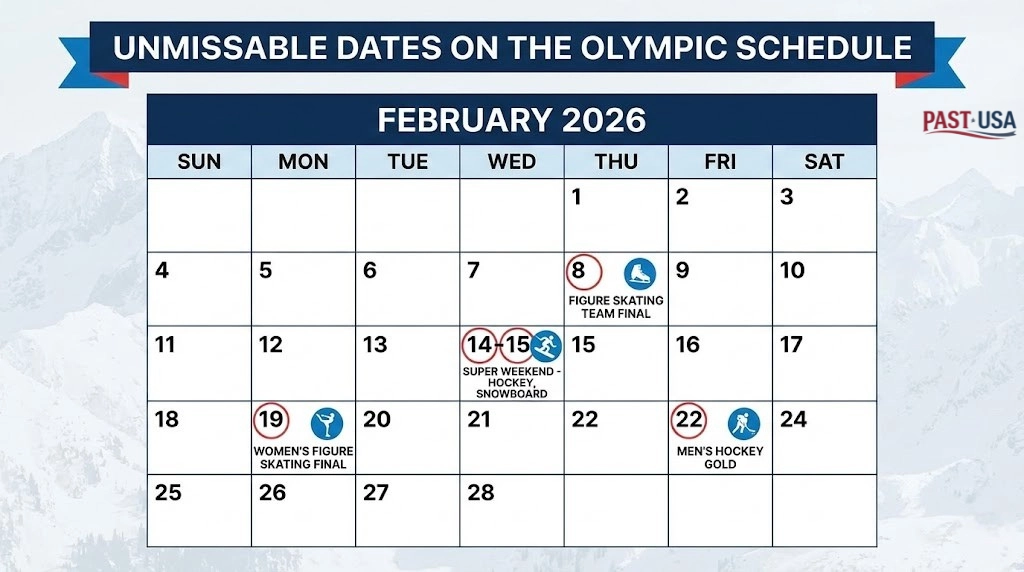
- Sunday, February 8th (The First Weekend): The Men’s Downhill (weather permitting) is the blue-ribbon event of alpine skiing. On the ice, the final phase of the Figure Skating team event will decide the first major glamorous gold of the Games.
- Use the “Super Bowl Weekend” Gap: Super Bowl LX takes place during the first Sunday of the Games. NBC Universal, holding rights to both, will likely orchestrate a massive sports weekend, using the Super Bowl lead-out to hype a major Olympics primetime broadcast.
- The Middle Weekend (Feb 14-15): This is often the busiest weekend of the Games. Expect finals in marquee events like the Snowboard Halfpipe, major speed skating distances, and crucial knockout-round hockey games.
- Thursday, February 19th (Tentative): The Women’s Figure Skating Free Skate. Historically one of the highest-rated nights of television in the world.
- The Final Weekend (Feb 21-22): The crescendo. This features the four-man Bobsled final, the concluding cross-country mass start races, and the undisputed heavyweight champion of Winter Olympic events: The Men’s Ice Hockey Gold Medal Game, likely featuring rosters stacked with NHL superstars.
How to Watch: Mastering the Schedule as a US Viewer
Navigating the olympics schedule is half the battle; knowing how to watch is the other half.
In the United States, NBCUniversal holds the keys to the kingdom. The broadcast landscape has shifted significantly since the last several Winter Games.
- Peacock is Mandatory for Hardcore Fans If you want to watch the schedule live as it happens the 3 AM hockey games, the 5 AM ski races you need Peacock, NBC’s streaming service. They have promised to stream every event of the Milano Cortina games live. This is the only way to ensure you see a specific athlete or sport that might not make the curated primetime cut.
- The NBC Primetime Show is a Narrative The traditional evening broadcast on the NBC network is less about a live schedule and more about storytelling. They will package the biggest events of the day (usually Figure Skating, Alpine Skiing, and key American victories) into a polished production with interviews and analysis. If you want to avoid spoilers, stay off social media until after the primetime show concludes.
- Cable Networks for Overflow USA Network, CNBC, and E! will likely handle overflow coverage, particularly during the day. This is often where you will find endless hours of curling, hockey group stage games, and early rounds of freestyle events.
Conclusion: Embrace the Chaos of the Schedule
The next two weeks will be a glorious, chaotic mess of athletics and emotion. There will be inevitable weather delays pushing events to different days. There will be underdog victories that completely upend the predicted olympics schedule. There will be moments of heartbreak that happen live at 4:00 AM on a Tuesday.
That is the beauty of the Winter Games. Whether you are a die-hard fan setting your alarm for the middle of the night to catch live biathlon, or a casual viewer waiting for the primetime figure skating package, this guide serves as your foundation.
Keep checking your search engine of choice for “Winter olympics schedule today” or “olympics schedule today” for last-minute adjustments, stay hydrated, and get ready to cheer. The Milano Cortina 2026 Games have arrived, and the schedule is packed with potential history.
Also Read about TrumpRx which is trending very much.

Pingback: Brad Arnold Dies at 47: 3 Doors Down Singer Loses Cancer Battle
Pingback: 2026 Winter Paralympics: The Ultimate Guide