
The symbolic timepiece that gauges humanity’s proximity to total annihilation has moved once again, and the news is grim. As of January 27, 2026, the Doomsday Clock stands at 85 seconds to midnight the closest it has ever been to global catastrophe in its 79-year history.
This historic announcement by the Bulletin of the Atomic Scientists has sent shockwaves through the international community, trending across social media platforms in the USA and dominating headlines worldwide. The shift of four seconds forward from 89 seconds in 2025 signals a dire warning: the threats of nuclear war, uncontrolled climate change, and disruptive technologies like artificial intelligence are converging to create an unprecedented peril.
For those asking why the Doomsday Clock is trending today, the answer lies in the terrifying specificity of the warning. We are no longer counting minutes; we are shaving away seconds in a race against time that scientists warn we are currently losing.
What is the Doomsday Clock?
To understand the gravity of today’s announcement, one must understand the instrument itself. The Doomsday Clock is not a literal clock that measures time; it is a design that warns the public about how close we are to destroying our world with dangerous technologies of our own making.
Founded in 1947 by Manhattan Project scientists who felt a deep responsibility for the atomic age they helped usher in, the Bulletin of the Atomic Scientists has maintained the clock ever since. Originally set at seven minutes to midnight, the hands have moved forward and backward 26 times, reacting to geopolitical shifts, scientific advancements, and environmental degradation.
“Midnight” represents the theoretical point of apocalypse the moment of a global catastrophe that ends human civilization. By moving the hands to 85 seconds to midnight, the Bulletin’s Science and Security Board is effectively stating that the risk of extinction is higher today than during the height of the Cold War, the Cuban Missile Crisis, or the initial years of the War on Terror.
Why 85 Seconds? The Three Pillars of Peril
To fully grasp why the Doomsday Clock matters, we must look deeper into the specific mechanics of the threats cited by the Bulletin in 2026.
The New Nuclear Reality
The collapse of the New START treaty is not just a bureaucratic failure; it is a mechanical one. For decades, this treaty allowed for “on-site inspections.” American experts could go to Russia and count warheads, and vice versa. This created a baseline of trust–or at least, verified mistrust.
With the expiration of these inspections, we are entering an era of “dark silos.” Intelligence agencies will have to guess the capabilities of their adversaries. In the world of nuclear deterrence, guessing leads to worst-case scenario planning. If the US assumes Russia has doubled its arsenal, the US will double its own. This is the classic “security dilemma” that the Doomsday Clock was created to warn against.
Furthermore, the 2026 announcement highlighted the “three-way nuclear race.” Previously, arms control was a bilateral affair between Washington and Moscow. Now, Beijing’s rapid expansion of its nuclear silo fields has complicated the calculus. The Bulletin warns that there is currently no diplomatic table where all three powers are sitting.

The Climate Tipping Points
The Doomsday Clock began incorporating climate change in 2007. Back then, it was a theoretical concern for the future. In 2026, the Bulletin’s language shifted from “mitigation” to “adaptation and survival.”
The report detailed specific “tipping points” that are flashing red. The destabilization of the Thwaites Glacier in Antarctica (often called the Doomsday Glacier) is accelerating faster than models predicted. The slowing of the Atlantic Meridional Overturning Circulation (AMOC) threatens to plunge Europe into a deep freeze while baking the tropics. These are not political talking points; they are planetary boundaries that do not care about borders or treaties.

The Psychology of 85 Seconds
Why does the Doomsday Clock captivate us? Psychologists argue that the clock provides a tangible framework for intangible fear. It turns “existential dread” into a number.
In 2026, the psychological toll of the “polycrisis” is a threat in itself. “Crisis fatigue” leads to apathy. The Bulletin’s greatest challenge this year is not just analyzing the data, but communicating it in a way that doesn’t cause the public to shut down. By moving the clock to 85 seconds, they are trying to pierce through the noise of a distracted world.
The “85 seconds” setting is also a mathematical signal. It implies that the margin for error is effectively zero. A single misinterpreted radar blip, a single rogue AI algorithm, or a single massive crop failure could trigger the cascade.
A Call for a New Manhattan Project
In their closing remarks, the scientists behind the Doomsday Clock called for a “New Manhattan Project for Peace.” Just as the world’s best minds were once gathered to create the bomb, they argue that we now need a similar concentration of resources and intellect to dismantle the threats we face.
This would involve:
- Massive investment in Carbon Capture: Not just reducing emissions, but actively scrubbing the atmosphere.
- Global AI Governance: A “Geneva Convention” for digital minds.
- Nuclear De-escalation: A unilateral move by a major power to step back from the brink, inviting others to follow.
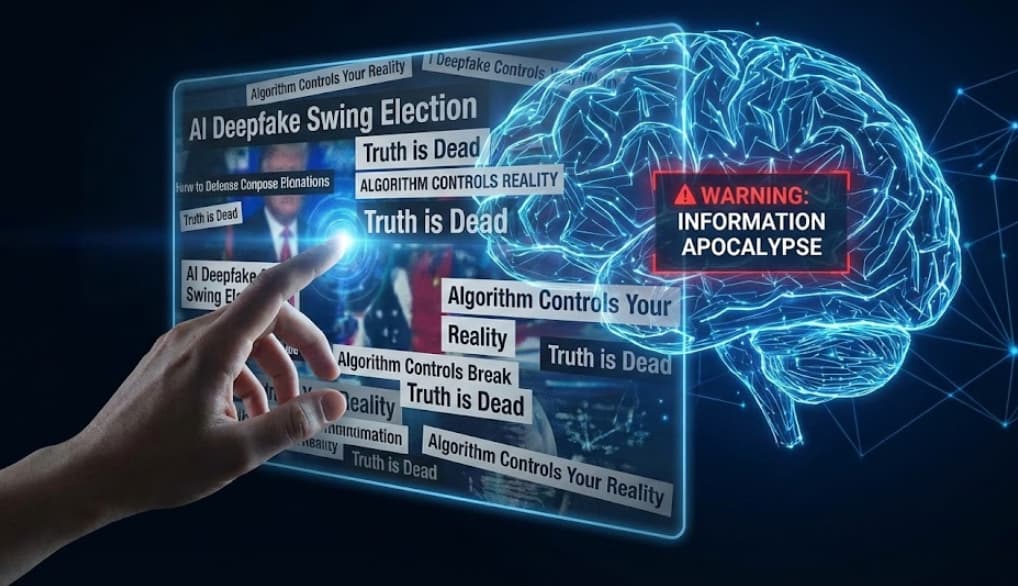
The Doomsday Clock is ticking. 85 seconds is not a lot of time, but it is some time. And as long as the clock is ticking, it means we are still here. The challenge of 2026 is to ensure we are still here in 2027.
A History of Warning: How We Got Here
The journey to 85 seconds has been a steady march toward the brink.
- 1947: The Doomsday Clock debuts at 7 minutes to midnight.
- 1953: The US and Soviet Union test the first hydrogen bombs. The clock moves to 2 minutes to midnight.
- 1991: The Cold War ends, and the Strategic Arms Reduction Treaty is signed. The clock moves back to 17 minutes to midnight the safest point in its history.
- 2018: The clock moves to 2 minutes to midnight again, matching the 1953 record, citing “nuclear posture” and climate neglect.
- 2020: The clock moves to 100 seconds to midnight, entering the realm of seconds for the first time.
- 2023-2024: The clock sits at 90 seconds to midnight due to the Ukraine war.
- 2025: It ticks to 89 seconds.
- 2026: We arrive at 85 seconds.
The contrast between 1991’s 17 minutes and today’s 85 seconds is haunting. It represents a squandered “peace dividend” and a failure of three decades of international diplomacy.
The Global Reaction: Why It’s Trending in the USA
The hashtag #DoomsdayClock is currently the number one trend in the United States, and for good reason. The American public is feeling the anxiety of these convergence threats intimately.
Political analysts suggest that the trending status is driven by a mix of genuine fear and political frustration. With the US presidential administration facing criticism over the stalled New START negotiations and the aggressive posture regarding nuclear testing, the Doomsday Clock serves as a non-partisan validation of the public’s worst fears.
Social media platforms like X (formerly Twitter) and TikTok are flooded with explainers, reactions, and memes a modern way of coping with existential dread. However, unlike previous years where reactions were often dismissive, the tone in 2026 is markedly more somber. The visibility of climate disasters in the US Midwest and the tangible rise in global conflict has made the “85 seconds” figure feel less like a metaphor and more like a forecast.
The Role of “Disruptive Technologies”
The Bulletin placed a heavy emphasis this year on “disruptive technologies,” a category that includes bio-engineering and cyber warfare. The Doomsday Clock is highly sensitive to the democratization of danger. Decades ago, only a superpower could end the world. Today, a small group of bad actors with access to CRISPR technology or advanced cyber-weapons could trigger a cascade of events leading to catastrophe.
The report specifically mentioned the lack of oversight in biological labs. The potential for an accidental release of a manufactured pathogen whether by error or terror remains a “biological wild card” that the international community has failed to regulate effectively.
Is There Hope? Turning Back the Clock
Despite the terrifying proximity to midnight, the Bulletin of the Atomic Scientists insists that the Doomsday Clock is not a prediction of the inevitable. It is a warning designed to spark action.
“We are not saying it is too late,” said Alexandra Bell, President and CEO of the Bulletin. “We are saying there is no time to waste.”
The clock has been turned back before, most notably in 1991. The Bulletin outlines specific steps that could move the hand away from midnight in 2027:
- Renew Nuclear Dialogue: The US and Russia must return to the negotiating table immediately to extend New START or create a stopgap measure.
- Climate Accountability: Nations must pivot from “setting targets” to “enforcing penalties” for carbon emissions.
- AI Regulation: International norms must be established to prevent AI from controlling nuclear launch systems.

What Can You Do?
It is easy to feel paralyzed by the scale of the threats represented by the Doomsday Clock. However, cynicism is what pushes the hand forward. Action pushes it back.
- Vote with Science in Mind: Support candidates who prioritize climate action and arms control diplomacy.
- Demand Digital Hygiene: actively fight disinformation by verifying sources before sharing, reducing the power of the “information armageddon.”
- Local Action: Community resilience regarding climate adaptation contributes to global stability.
Conclusion: The Final Warning
The announcement of 85 seconds to midnight is a historic indictment of modern leadership. It is a signal that the safeguards we relied on for half a century have eroded. The Doomsday Clock is ticking, and its rhythm is getting faster.
As we move through 2026, the question is not whether the clock will strike midnight, but whether we have the collective will to unwind the gears of our own destruction. For now, the world holds its breath, watching the second hand twitch closer to the unthinkable. Checkout The Nebraska vs Michigan Highlights.


Pingback: Ajit Pawar Dies in Plane Crash: Breaking News, Investigation & Political Impact 2026