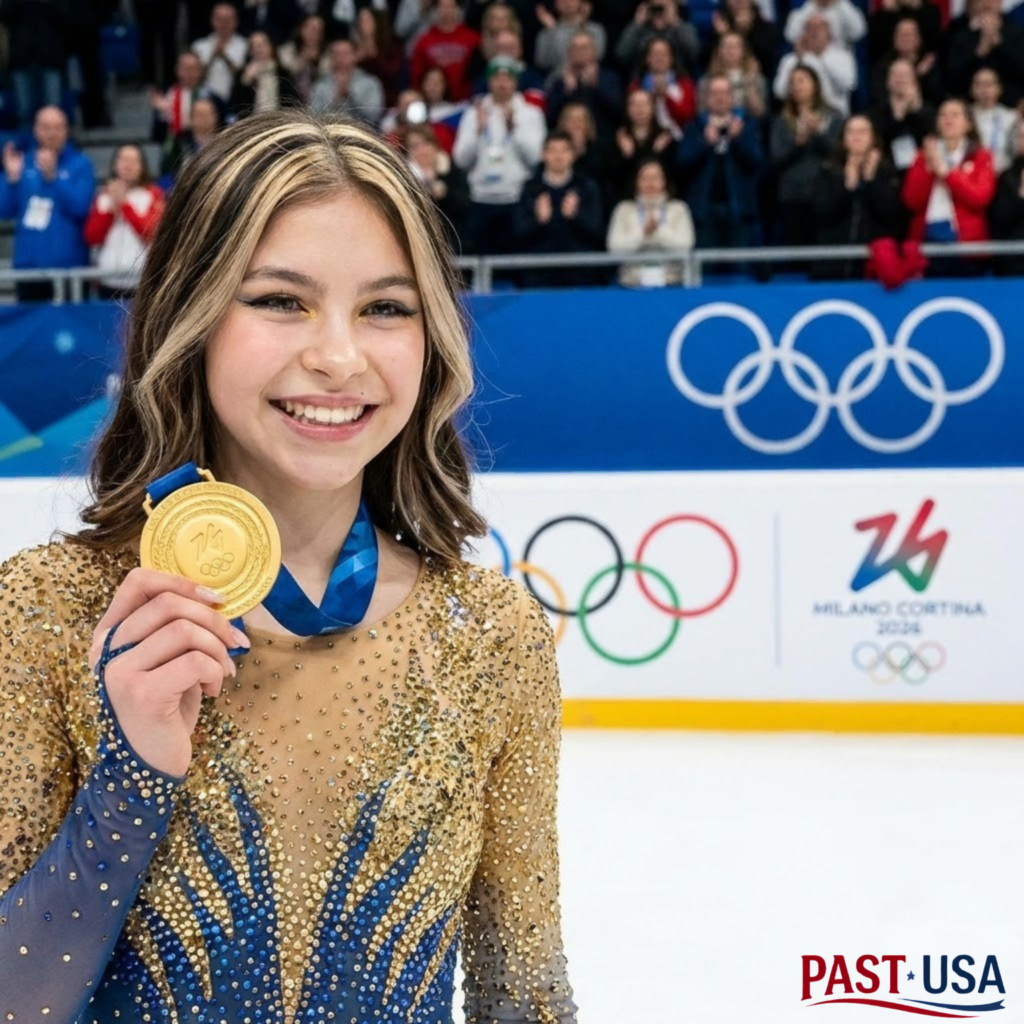
If you have looked at any social media platform, news aggregate, or sports broadcast over the last twenty-four hours, you have undoubtedly seen one name dominating the global conversation. Alysa Liu is currently the number one trending search term on Google in the United States, and for an incredibly historic reason. On Thursday evening, February 19, 2026, at the Milano Cortina Winter Olympics, the 20-year-old American figure skater did the unthinkable: Alysa Liu captured the Olympic gold medal in the women’s individual figure skating event.
This monumental achievement is not just another athletic victory; it is the culmination of one of the most extraordinary, unconventional, and inspiring arcs in the history of modern sports. By securing the top spot on the podium, Alysa Liu snapped a staggering 24-year gold medal drought for American women in the sport, bringing the title back to the United States for the first time since Sarah Hughes triumphed in Salt Lake City in 2002. Furthermore, she became the first American woman to win any Olympic medal in the individual event since Sasha Cohen took home silver in 2006 a year the newly crowned champion was barely a toddler.
But the reason millions of Americans are frantically searching for her name right now goes far beyond the hardware hanging around her neck. It is the story of how she got here. From being a heavily pressured 13-year-old prodigy to retiring entirely at age 16 to protect her mental health, to traversing the Himalayas, to returning to the ice purely on her own terms as a joyful, anime-loving, alt-aesthetic Gen-Z icon Alysa Liu has fundamentally rewritten the rulebook on what it means to be an elite athlete.
This comprehensive deep-dive explores every facet of her historic 2026 Olympic victory, her deeply personal journey of burnout and rebirth, and why her joyous rebellion is capturing the hearts of a generation.
Breaking Down the Historic Free Skate
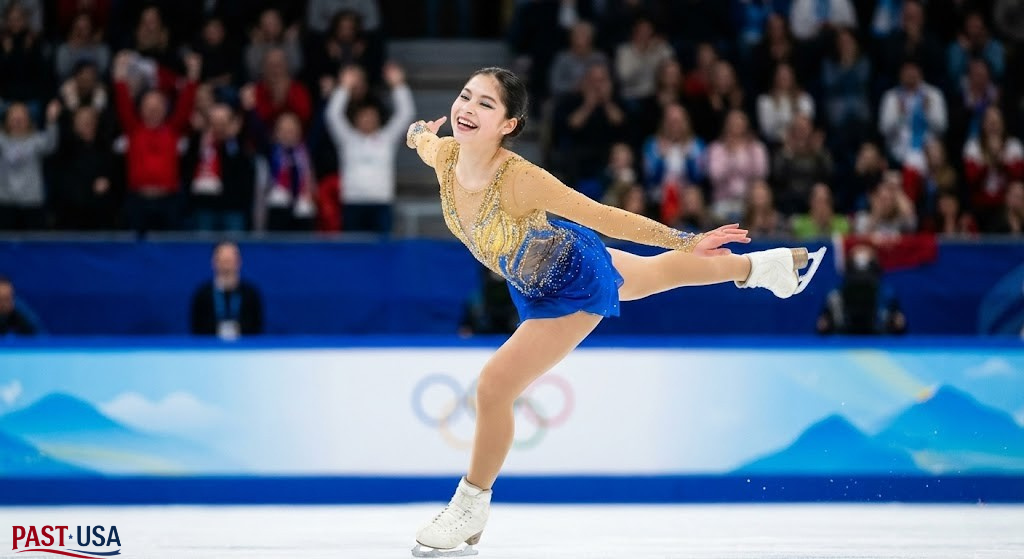
Going into the women’s free skate at the Milano Ice Skating Arena on Thursday night, the tension was palpable. Alysa Liu sat in third place following the short program, trailing behind the formidable Japanese duo of 17-year-old Ami Nakai and reigning world medalist Kaori Sakamoto. The pressure to break the two-decade American drought was immense, but as she stepped onto the ice, dressed in a shimmering, sequined gold outfit accented by a subtle blue ribbon, she projected nothing but pure, unadulterated joy.
A Masterclass Set to “MacArthur Park Suite”
Skating third-to-last in the final flight, Alysa Liu delivered what commentators are already calling the performance of a lifetime. Set to the sweeping, disco-infused crescendo of Donna Summer’s “MacArthur Park Suite,” her routine was a masterclass in both technical precision and artistic liberation.
She landed all seven of her planned triple jumps flawlessly, including three complex combination jumps that racked up massive technical scores. Unlike the rigid, anxiety-ridden performances often seen at the Olympic level, she moved with an infectious, carefree energy. Alysa Liu sailed through her triple lutz and triple salchow with ease, making eye contact with the crowd and beaming a massive smile throughout her choreographic step sequences.
By the time she dropped into her graceful, closing layback spin, the 12,000-seat arena had transformed into a white-hot wall of sound. The crowd was on its feet before the music even stopped.
The Reaction Heard ‘Round the World
As the final notes faded, Alysa Liu playfully flicked her uniquely styled, highlighted ponytail–a signature look resembling the growth rings of a tree. The emotion finally bubbled over. Looking directly into a broadcasting camera as she stepped off the ice, she shouted, “That’s what the f I’m talking about!” an instant viral moment that encapsulated her unapologetic authenticity.
When the judges’ scores were revealed, the arena erupted again. She earned a massive season-best score of 150.20 for the free skate, catapulting her overall total to 226.79 points. She took a seat in the leader’s chair, waiting to see if it would hold.
The Podium Shakeup
The two skaters remaining had to deliver perfection to beat her. Kaori Sakamoto, a heavy favorite and veteran of the sport, skated beautifully to an Edith Piaf medley but suffered minor deductions on a triple flip and double axel combination, scoring 224.90 to take the silver medal. Finally, the short-program leader, Ami Nakai, took the ice. The teenager nailed her opening triple Axel but mistimed a crucial triple loop-triple toeloop combination, stepping out and settling for a double. The mistake dropped Nakai to ninth in the free skate and third overall with a score of 219.16, securing the bronze.
When Nakai’s score was announced, confirming the American victory, teammate Amber Glenn leaped into the kiss-and-cry area to raise Liu’s arm in triumph. Alysa Liu had officially conquered the Olympic world, claiming her second gold of the 2026 Games after helping Team USA secure the team event gold earlier in the week.
The Historical Significance
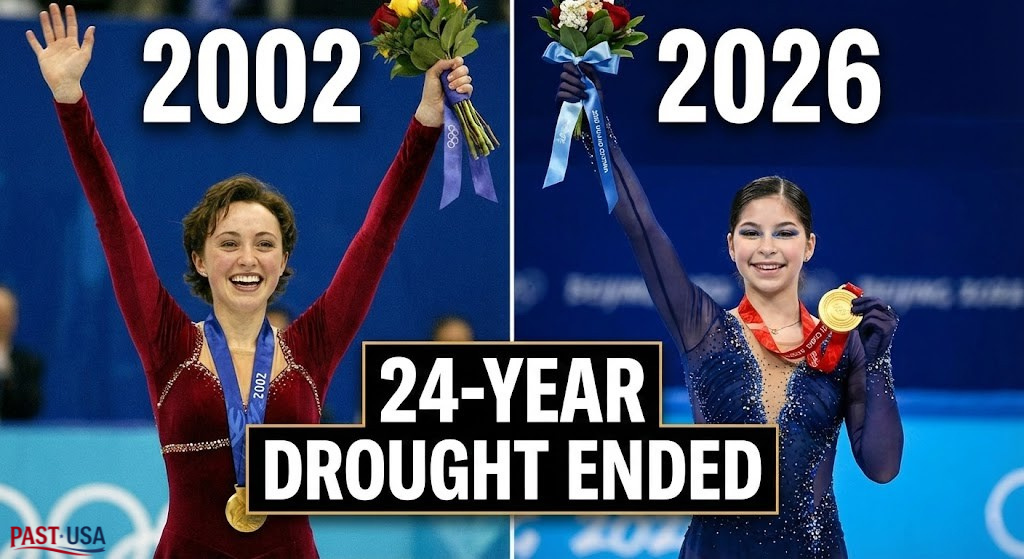
To truly appreciate the magnitude of this victory, one must understand the heavy, historical baggage carried by American female figure skaters. For decades, the United States dominated the sport, producing household names like Peggy Fleming, Dorothy Hamill, Kristi Yamaguchi, Tara Lipinski, and Michelle Kwan.
However, after Sarah Hughes shocked the world to win gold at the 2002 Salt Lake City Games, and Sasha Cohen captured silver in Torino in 2006, the well completely dried up. For twenty years, no American woman stood on an Olympic podium in the individual event. The rise of the heavily state-sponsored Russian skating machine (led by controversial coach Eteri Tutberidze) and the flawless technical supremacy of the Japanese federation created an impenetrable wall.
Generations of talented American skaters from Ashley Wagner to Gracie Gold to Bradie Tennell carried the crushing weight of this drought, often succumbing to the immense media pressure.
When Alysa Liu secured the gold in Milan, she didn’t just win a medal; she exorcised a two-decade-old demon for U.S. Figure Skating. She became only the eighth American woman in history to win the sport’s biggest prize. Notably, she achieved this in an era where the sport is actively attempting to reform its scoring and age limits following the 2022 doping scandals that marred the Beijing Games. By winning with health, longevity, and joy, she has set a new, sustainable gold standard for the sport’s future.
The Prodigy Years
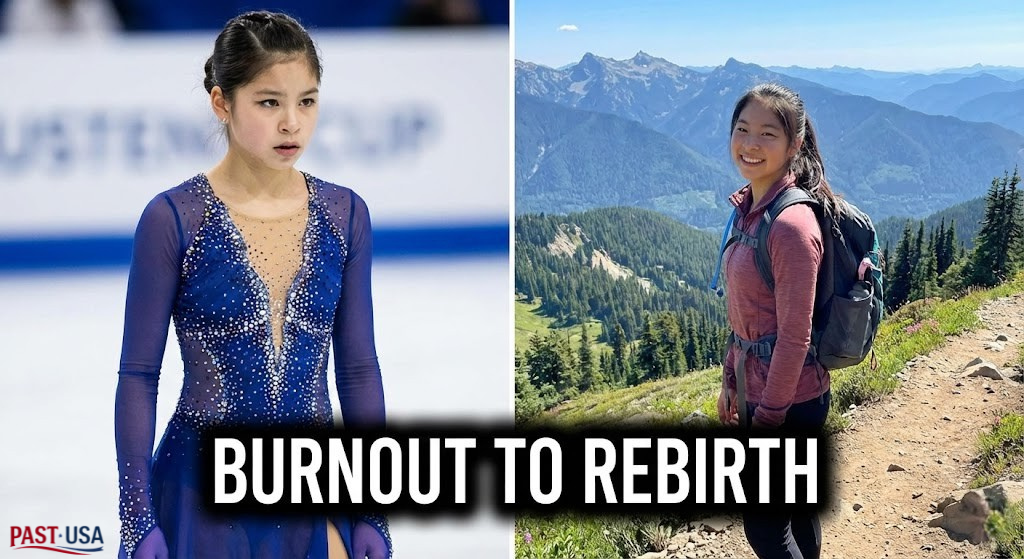
The story of how Alysa Liu reached the top of the Olympic podium in 2026 actually begins more than a decade ago in the San Francisco Bay Area. Born in Clovis, California, and raised in Richmond by her single father, Arthur Liu (an attorney who fled China following the 1989 Tiananmen Square protests), her path to greatness was forged early.
She was a bona fide child prodigy. In 2019, at the staggering age of 13, she landed a triple Axel to become the youngest-ever U.S. women’s national champion. She repeated the feat in 2020, adding a quadruple Lutz to her repertoire. The American media quickly crowned her the savior of U.S. figure skating. The expectations placed on her tiny shoulders were astronomical.
However, the relentless grind of elite training, combined with the extreme pressure to perform complex, body-breaking jumps before her body had even fully matured, took a massive toll. She competed at the 2022 Winter Olympics in Beijing, finishing a respectable sixth amidst the chaotic backdrop of the Kamila Valieva doping scandal. A month later, Alysa Liu won a bronze medal at the 2022 World Championships.
And then, at the age of 16, at the absolute peak of her athletic prime, she shocked the world by announcing her retirement.
Walking Away to Survive
In a sport where teenagers routinely sacrifice their entire childhoods for a shot at glory, walking away was a radical act of self-preservation. “I was 16 and college was coming up. Like, I wanted to do so much,” she reflected. She admitted to feeling boxed in, exhausted, and completely burned out by a life that revolved entirely around freezing ice rinks, dietary restrictions, and judging panels.
For nearly two years, she vanished from the competitive scene. She enrolled at UCLA to study psychology. She traveled the world with her friends. She hiked to the Mount Everest Base Camp. She lived the life of a normal, exploratory teenager a luxury rarely afforded to Olympic prodigies.
The Epic Comeback
By mid-2023, the time away had worked its magic. Gradually, Alysa Liu began visiting public skating sessions at the Toyota Sports Performance Center in El Segundo, California. Without the pressure of coaches screaming or national federation mandates, she realized that she still loved the feeling of gliding on the ice. The complex jumps that made her famous hadn’t abandoned her; they had just been waiting for her to find her joy again.
In 2024, Alysa Liu announced her official comeback, but with strict new boundaries. She completely overhauled her approach to the sport. She demanded creative control over her music, her choreography, and her costumes. She refused to obsess over the online discourse, heavily limiting her social media intake to protect her mental health.
“Protecting my identity is my main goal,” Alysa Liu explained to the press in Milan. “I know exactly what it’s like to not have that. My experience with it before has taught me how I should guard myself.”
Her coaches, Phillip DiGuglielmo and Massimo Scali, embraced this new philosophy. They cultivated an environment where her mental well-being superseded medal counts. This relaxed, holistic approach paid off spectacularly. In 2025, she won the World Championship in Boston, cementing her status as a gold-medal favorite for the upcoming Olympics.
The “Blade Angels” and a New Era of Team USA Sisterhood
One of the most heartwarming narratives of the 2026 Milano Cortina Games was the deep, supportive bond between the American women’s figure skating team, affectionately dubbed the “Blade Angels” by fans and media. Alysa Liu was joined in Italy by 26-year-old veteran Amber Glenn and 18-year-old Isabeau Levito.
Unlike the intensely competitive, often icy rivalries that defined the Nancy Kerrigan/Tonya Harding or Michelle Kwan/Tara Lipinski eras, the 2026 team operated as a fiercely supportive sisterhood. They won the Team Event gold medal together during the first week of the games, setting a positive tone for the individual event.
In the individual free skate, Amber Glenn mounted an incredible comeback of her own. After a disastrous short program left her in 13th place, Glenn nailed a massive triple axel in her free skate to surge all the way to 5th place overall. When Liu’s winning score was announced, it was Glenn who was the first to embrace her in the kiss-and-cry. Isabeau Levito, who finished 12th after a tough free skate, was enthusiastically cheered on by her teammates.
“She did so good,” Alysa Liu said of Glenn’s comeback during her post-win press conference. “I watched it on the bus on the way here, and aw, she killed it, and I’m really happy for her.” This genuine camaraderie has fundamentally shifted the toxic culture that has long plagued women’s figure skating.
The Gen-Z Alt-Girl Aesthetic: Redefining the “Ice Princess”
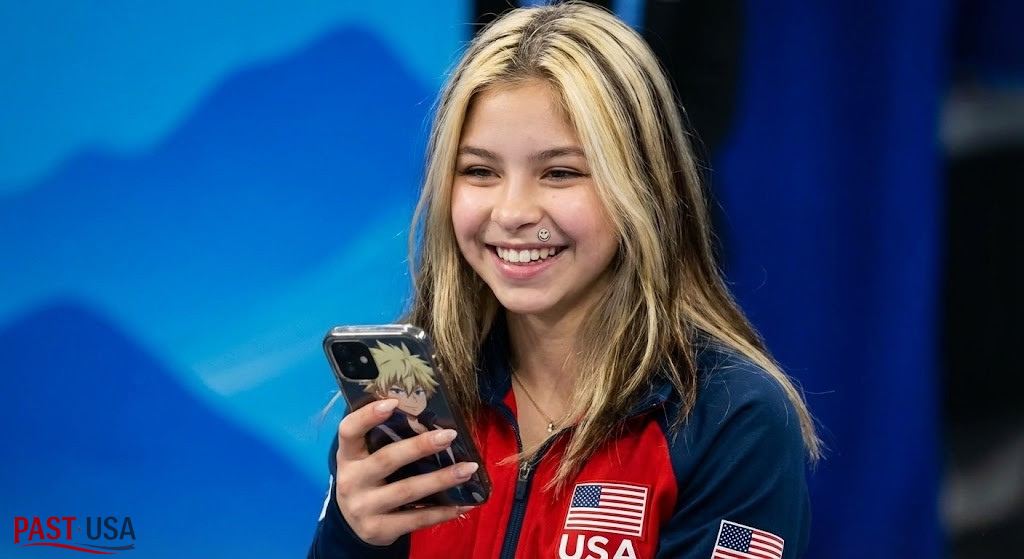
Perhaps the most fascinating aspect of why Alysa Liu is trending so heavily right now is how completely she shatters the traditional archetype of an Olympic figure skater. For a century, the sport has been defined by an ultra-feminine, highly polished, “ice princess” aesthetic chignons, classical music, and demure smiles.
Liu has completely obliterated that mold. She skates with a visible frenulum (smiley) piercing that glints under the arena lights. She sports a bleached, highlighted hairstyle designed to look like the concentric growth rings of a tree. In her short program earlier in the week, Alysa Liu skated to the indie-jazz sounds of Laufey. She is an alt-girl from the East Bay who happens to be the best in the world at her sport.
Fans across TikTok, X (formerly Twitter), and Instagram have been lighting up the internet, celebrating her as proof that you do not have to compromise your personal style or conform to archaic standards of presentation to achieve absolute greatness.
The Anime Obsession Goes Viral
Her Gen-Z relatability peaked in the hours following her victory when, instead of offering standard media platitudes about hard work, she used her post-win interviews to passionately recommend anime.
In an interview that instantly went viral, she shouted out blockbuster shonen hits and dark fantasy cult classics. She named Jujutsu Kaisen and Tatsuki Fujimoto’s Chainsaw Man as two series she couldn’t stop thinking about, praising their stylish action and complex morality. She also referenced the legendary Attack on Titan. The internet absolutely devoured this. The image of an Olympic gold medalist stepping off the podium to excitedly discuss the “Culling Game” arc of JJK endeared her to millions of fans who had never previously watched a single figure skating routine.
What Lies Ahead for the Golden Skater?
As the 2026 Winter Olympics draw to a close, the world is waiting to see what the newly minted champion will do next. Financially, her comeback has been a game-changer. Winning the Olympic gold, combined with her highly marketable, authentic Gen-Z persona, has opened the floodgates for massive global endorsements. Sports marketing analysts predict she will become one of the highest-earning female athletes of the decade.
But if her history tells us anything, it is that Alysa Liu will not be pressured into any path that does not bring her joy. Leaders in her hometown of Oakland are currently preparing massive celebrations to honor their champion, with Mayor Barbara Lee calling her “a symbol of determination and ambition.”
Whether she decides to defend her world title next year, join high-paying professional ice tours, or simply return to the UCLA campus to finish her psychology degree and binge more anime, one thing is certain: she has already secured her legacy.
“I don’t need this,” she said in Milan, gesturing to the heavy gold medal around her neck. “But what I needed was the stage, and I got that. So it was all good, no matter what happened. I mean, if I fell on every jump, I would still be wearing this dress. So it’s all good.”
Frequently Asked Questions (FAQs)
Q. When did Alysa Liu win the gold medal?
She won the gold medal in the women’s individual figure skating free skate on Thursday, February 19, 2026, at the Milano Cortina Winter Olympics.
Q. Who was the last American woman to win Olympic figure skating gold before her?
Before her 2026 victory, the last American woman to win gold in the individual event was Sarah Hughes at the 2002 Salt Lake City Winter Olympics. The last American woman to win any* medal in the event was Sasha Cohen (silver) in 2006.
Q. Why did Alysa Liu retire in 2022?
At age 16, following the 2022 Beijing Olympics and World Championships, she announced her retirement due to severe burnout, mental fatigue, and a desire to experience a normal teenage life away from the extreme pressures of elite sports.
Q. What music did Alysa Liu skate to for her gold-medal performance?
She performed her near-flawless free skate to the “MacArthur Park Suite” by Donna Summer, a joyful and high-energy disco medley that perfectly matched her newfound love for the sport.
Q. How many gold medals did she win at the 2026 Olympics?
She won two gold medals in Milan. Prior to her individual victory, she helped Team USA secure the gold medal in the team figure skating event.
Q. What are the “Blade Angels”?
The “Blade Angels” is the affectionate nickname given by fans to the 2026 U.S. Olympic women’s figure skating team, which consists of Liu, Amber Glenn, and Isabeau Levito. The trio is known for their incredibly supportive, sisterly dynamic.
Conclusion
The 2026 Winter Olympics will forever be remembered as the games where American women reclaimed the ice, led by a skater who refused to be anything other than exactly who she is. Alysa Liu did not just win a gold medal; she won a battle for her own happiness. By stepping away from the brink of burnout and returning on her own terms, she demonstrated that mental health and elite athletic dominance are not mutually exclusive.
As she heads home to California, leaving behind a shattered 24-year drought and a trail of viral anime recommendations, she stands as a beacon of inspiration. She proved that the most powerful weapon an athlete can wield is not just technical perfection, but uncontainable, unapologetic joy.
Checkout The Arrest of Prince Andrew.