
In a devastating turn of events that has sent shockwaves from Mumbai to Washington D.C., Ajit Pawar, the Deputy Chief Minister of Maharashtra and one of India’s most consequential political figures, has died. The 66-year-old leader was killed instantly this morning when his private charter plane crashed while attempting to land in his stronghold of Baramati.
The death of Ajit Pawar is not just a loss for the state of Maharashtra; it marks the abrupt end of a tumultuous and highly influential political era. As news of the crash broke, “Ajit Pawar” immediately began trending in the United States, reflecting the global diaspora’s interest and the shock of the international diplomatic community at the sudden loss of a key Indian leader.
Authorities have confirmed that there were no survivors. Alongside Ajit Pawar, four others perished in the inferno: his personal security officer, a close political aide, and two pilots. As the sun set on Baramati today, the wail of sirens has been replaced by a heavy, stunned silence, broken only by the weeping of thousands of supporters who have gathered to pay their final respects to the man they affectionately called “Dada.”
The Crash: A Morning of Horror in Baramati
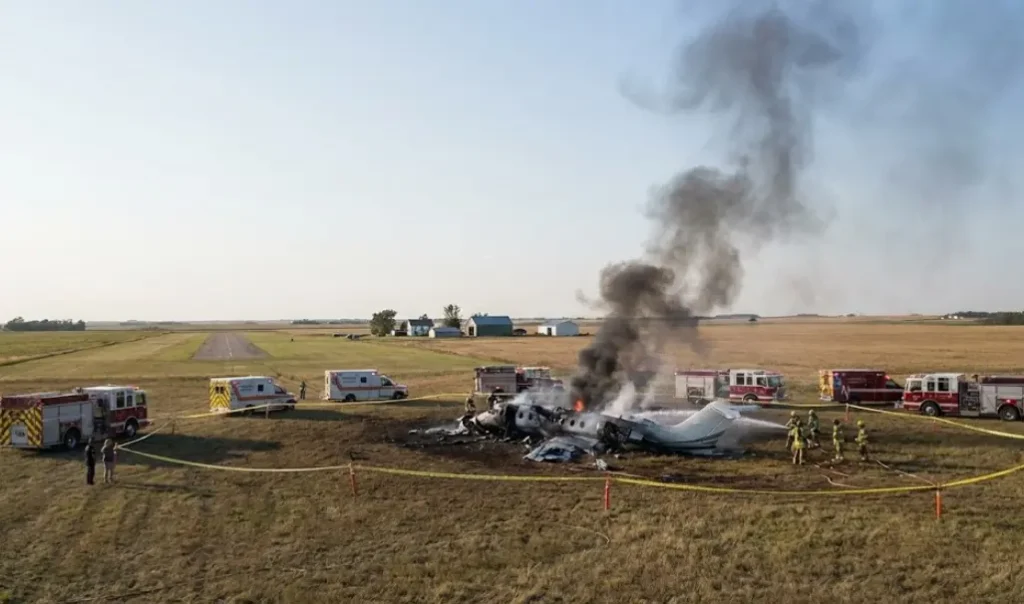
The incident occurred at approximately 8:45 AM local time. Ajit Pawar had boarded a Bombardier Learjet 45XR, operated by the Delhi-based charter company VSR Ventures, from Mumbai. The flight plan was routine a short hop to Baramati, the Pawar family’s political bastion in the Pune district, where Ajit Pawar was scheduled to address a series of rallies ahead of the crucial Zilla Parishad elections scheduled for February 5.
According to the Directorate General of Civil Aviation (DGCA), the flight proceeded normally until its final approach. Eyewitnesses on the ground near the Baramati airstrip described a terrifying scene. “The plane seemed to be tilting to the left,” said Ramesh Jadhav, a local farmer who was working in a nearby field. “It was coming in too low, and the engine sounded wrong. Suddenly, it clipped a tree and slammed into the open field. There was a massive explosion.”
Video footage from a nearby CCTV camera, which has since gone viral on social media, corroborates these accounts. It shows the jet banking sharply before disappearing behind a line of trees, followed by a plume of thick black smoke rising into the clear winter sky.
Fire tenders and emergency rescue teams rushed to the site within minutes, but the intensity of the blaze made immediate rescue impossible. By the time the flames were doused, the wreckage was unrecognizable. The bodies were charred beyond recognition, requiring DNA verification, though officials confirmed Ajit Pawar’s presence on the manifest.
A Career of Rebellion and Power
To understand why the death of Ajit Pawar is resonating so deeply, one must understand his unique position in Indian politics. He was the nephew of Sharad Pawar, the patriarch of the Nationalist Congress Party (NCP) and a titan of Indian politics. For decades, Ajit Pawar lived in his uncle’s shadow, serving as his reliable lieutenant, managing the party’s affairs in Maharashtra while Sharad Pawar handled national politics in New Delhi.
However, Ajit Pawar was a man of immense personal ambition. His career was defined by his restlessness and his desire to step out of the shadows. He served as the Deputy Chief Minister of Maharashtra a record six times, a testament to his indispensability, yet the top job Chief Minister always eluded him.
His political journey was marked by dramatic pivots. The most famous of these occurred in November 2019, when he shocked the nation by joining hands with the BJP’s Devendra Fadnavis in a dawn swearing-in ceremony, effectively revolting against his uncle. That government lasted only 80 hours, and Ajit Pawar returned to the NCP fold. But the seeds of rebellion were sown.
In July 2023, he orchestrated a final, decisive split. Walking away with a majority of NCP legislators, he joined the BJP-Shiv Sena (Eknath Shinde) government, claiming the party name and symbol for himself. This move cemented his reputation as a pragmatic, if ruthless, operator who prioritized power and development over ideological purity.
The “Dada” of Development
Despite his controversial political maneuvers, Ajit Pawar was widely respected for his administrative acumen. In the corridors of the Mantralaya (the state secretariat), he was known as a taskmaster who arrived at his office at 7:00 AM sharp a rarity in Indian politics. Bureaucrats respected his ability to clear files quickly and his intolerance for red tape.
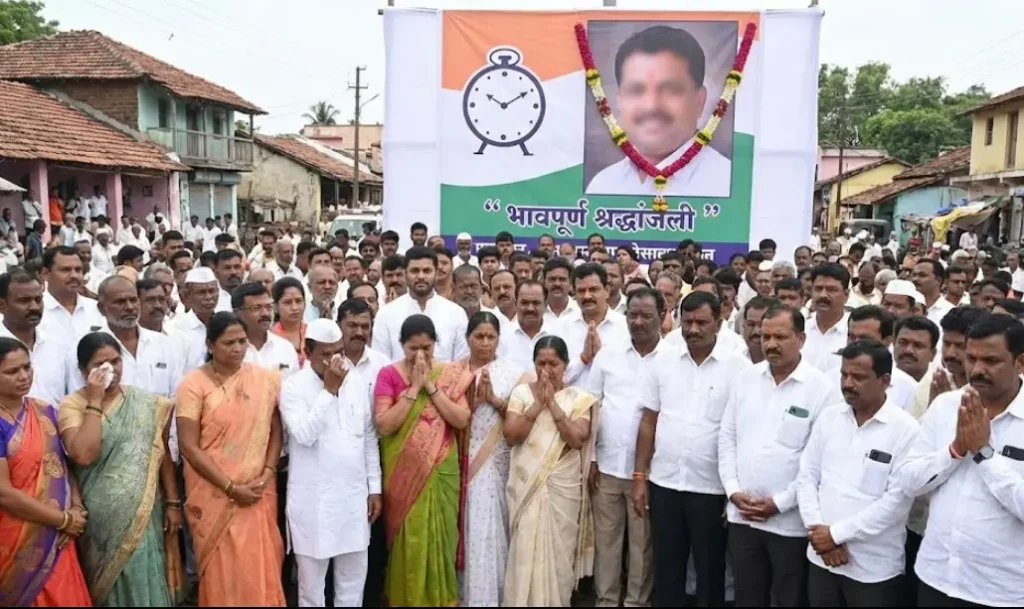
His supporters in Baramati credit him with transforming the region. Under his stewardship, Baramati became a model of rural development, boasting world-class educational institutions, Vidya Pratishthan (where his funeral will be held), and robust agricultural cooperatives. For the people of his constituency, he was not just a politician; he was a guardian.
“He knew the names of party workers in every village,” said Deepak Mankar, a local NCP leader, fighting back tears. “Ajit Pawar was not a leader who sat in an ivory tower. He was always among us. Maharashtra has lost its engine of growth today.”
Reactions from Across the Spectrum
The suddenness of the tragedy has united bitter political rivals in grief. Prime Minister Narendra Modi was among the first to react, posting on X (formerly Twitter): “Shocked and saddened by the untimely demise of Shri Ajit Pawar. He was a grassroots leader dedicated to the development of Maharashtra. My condolences to his family and millions of supporters.”
Perhaps the most poignant reaction came from his uncle, Sharad Pawar. Despite their political estrangement in recent years, the bond of blood remained. The 85-year-old veteran visited the crash site, appearing visibly shaken. Dispelling rumors that had begun circulating on social media, Sharad Pawar stated firmly, “This is a tragic accident. There is no conspiracy. I have lost my nephew, and Maharashtra has lost a capable son.”
Chief Minister Eknath Shinde and Deputy CM Devendra Fadnavis, Ajit Pawar’s partners in the ruling coalition rushed to Baramati. Fadnavis, who shared a complex love-hate relationship with Pawar, described the loss as personal. “I have lost a friend and a colleague. Ajit Pawar was a man of his word. His energy was infectious,” Fadnavis told reporters.
The state government has declared three days of official mourning. Schools and colleges in Maharashtra will remain closed tomorrow, and the national flag will fly at half-mast across government buildings.
The Investigation: Questions on Safety
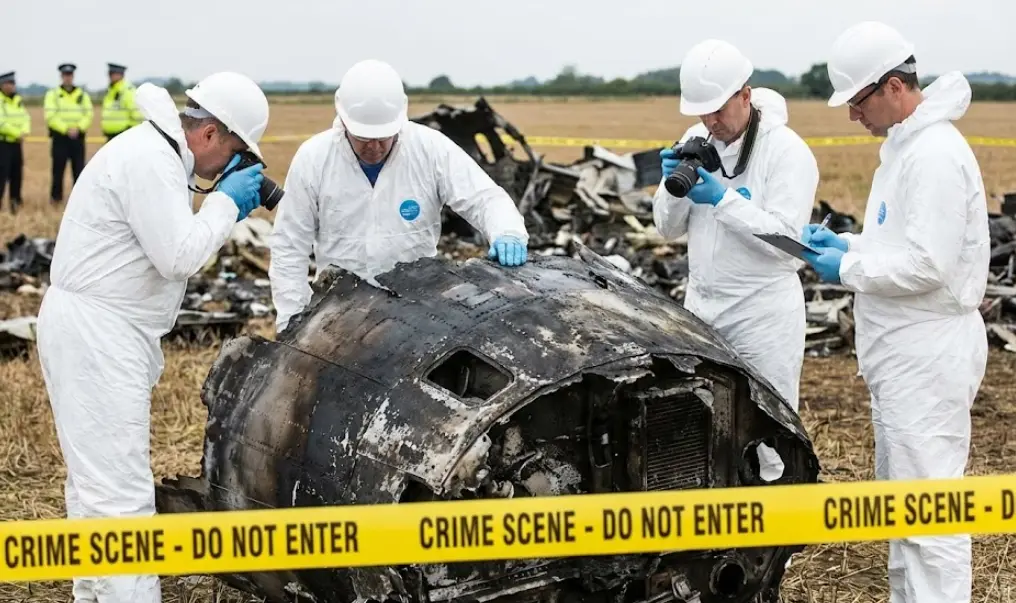
While the mourning begins, serious questions are being asked about aviation safety for VIPs in India. The DGCA has ordered a high-level probe into the crash. The Aircraft Accident Investigation Bureau (AAIB) has already dispatched a team to the site to recover the Flight Data Recorder (Black Box) and the Cockpit Voice Recorder.
Initial speculation focuses on two possibilities: technical failure or pilot error. The Learjet 45 is generally considered a safe and reliable aircraft, widely used for corporate travel globally. However, landing at smaller, provincial airstrips like Baramati can be challenging, especially if weather conditions or visibility are less than ideal. While the weather was reported as clear, wind shear or a sudden mechanical snag during the critical landing phase cannot be ruled out.
Aviation experts are also looking into the maintenance record of VSR Ventures. “Charter flights often operate on tight schedules,” noted aviation analyst Capt. Shakti Lumba. “We need to verify if the crew was fatigued and if the aircraft had undergone all mandatory checks. The steep bank angle seen in the video suggests a potential stall or a loss of control at low altitude.”
A History of Aviation Tragedies in Indian Politics
The death of Ajit Pawar adds another dark chapter to the long history of Indian political leaders losing their lives in air crashes. The list is tragically long and includes some of the country’s most promising figures:
- Sanjay Gandhi (1980): The son of Prime Minister Indira Gandhi died while performing aerobatics in a private plane in Delhi.
- Madhavrao Scindia (2001): A senior Congress leader and former Railway Minister, killed in a plane crash in Uttar Pradesh.
- G.M.C. Balayogi (2002): The Lok Sabha Speaker died in a helicopter crash in Andhra Pradesh.
- Y.S. Rajasekhara Reddy (2009): The powerful Chief Minister of Andhra Pradesh died when his helicopter crashed in the Nallamala forests during a storm.
- Dorjee Khandu (2011): The Chief Minister of Arunachal Pradesh, killed in a helicopter crash.
- General Bipin Rawat (2021): India’s first Chief of Defence Staff, who died in a helicopter crash in Tamil Nadu.
Each of these deaths altered the political trajectory of their respective states and the nation. Ajit Pawar’s death is expected to have a similar impact.
The Political Void in Maharashtra
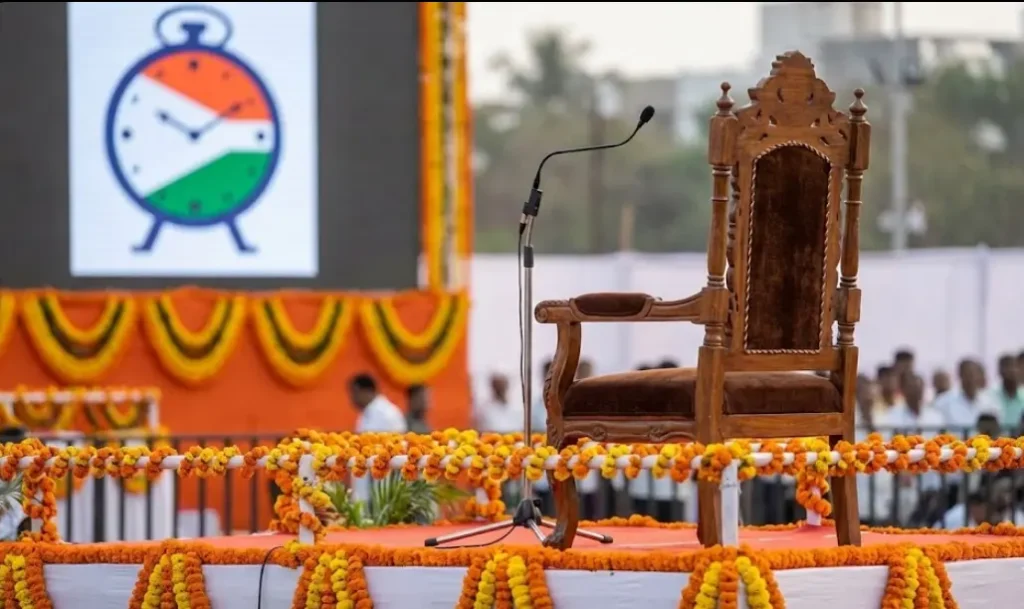
The timing of Ajit Pawar’s death creates a massive vacuum in Maharashtra politics. The state is currently in a fragile political equilibrium. The “Mahayuti” alliance (BJP + Shinde Sena + Ajit Pawar’s NCP) relied heavily on Ajit Pawar’s ability to consolidate the Maratha vote and his grip on the cooperative sugar factories of western Maharashtra.
Without him, his faction of the NCP faces an existential crisis. The party was built around his personality and administrative power. Questions are already swirling about succession. Will his sons, Parth Pawar and Jay Pawar, be able to step up? Parth, who lost a high-profile Lok Sabha election in 2019, has been active but lacks his father’s mass appeal. Jay is seen as more low-profile.
Political analysts predict a potential realignment. Many legislators who sided with Ajit Pawar solely for power might now drift back to the Sharad Pawar camp, potentially strengthening the opposition Maha Vikas Aghadi ahead of the next assembly elections. “The glue that held the NCP rebel faction together was Ajit Pawar,” explained political commentator Suhas Palshikar. “Without him, the center of gravity may shift back to the patriarch, Sharad Pawar.”
The Man Behind the Headlines
Beyond the politics, Ajit Pawar was a man of contradictions. He was blunt, often sparking controversies with his off-the-cuff remarks. In 2013, he famously courted trouble with a crass comment regarding water shortages during a drought, for which he later apologized profusely. Yet, he was also the man who would personally ensure water tankers reached drought-hit villages.
He was a fitness enthusiast, known for his brisk walks and disciplined diet. He avoided the late-night social circuit of Mumbai, preferring to return to his family or his constituency. His connection with the farmers was genuine; he spoke their language and understood their issues regarding irrigation and crop prices better than perhaps any other minister in the state.
Conclusion: A Legacy Cut Short
As the sun rises tomorrow, Maharashtra will wake up to a different political reality. The funeral, scheduled for 11:00 AM at the Vidya Pratishthan grounds, is expected to be attended by hundreds of thousands of people. Prime Minister Modi and Home Minister Amit Shah are likely to fly in to pay their respects.
Ajit Pawar lived his life in the fast lane of politics. He took risks, broke alliances, and forged new paths with a singular focus on power and governance. While his critics called him an opportunist, his admirers saw a pragmatist who wanted to get things done.
Today, as “Ajit Pawar” trends in the USA and across the globe, the world remembers a leader who, for better or worse, defined the politics of India’s richest state for three decades. The plane crash in Baramati has silenced a roaring voice, but the echoes of his decisions will shape Maharashtra for years to come. Checkout Our Latest Post About Doomsday Clock 2026.
5 Key Takeaways on the Death of Ajit Pawar
- Confirmed Fatalities: Ajit Pawar and four others (two pilots, one security officer, one aide) died instantly in a Learjet 45 crash in Baramati.
- No Survivors: The crash was catastrophic, with the plane catching fire immediately upon impact near the runway.
- Political Crisis: His death leaves a massive void in the ruling Mahayuti alliance and raises questions about the future of his NCP faction.
- Investigation Launched: The DGCA and AAIB have started a probe; initial reports suggest the plane banked sharply before crashing.
- State Mourning: Maharashtra has declared a three-day mourning period; the funeral will be held with full state honors on January 29, 2026.
Frequently Asked Questions (FAQ)
Who was Ajit Pawar?
Ajit Pawar was the Deputy Chief Minister of Maharashtra and the leader of a faction of the Nationalist Congress Party (NCP). He was the nephew of veteran leader Sharad Pawar
.
When did Ajit Pawar die?
He died on the morning of January 28, 2026, in a plane crash.
Where did the crash happen?
The crash occurred near the Baramati airport in the Pune district of Maharashtra, India.
Was it a conspiracy?
NCP founder Sharad Pawar has stated that it was a tragic accident and ruled out any conspiracy. A formal investigation is underway.
Who will succeed Ajit Pawar?
It is currently unclear. His sons Parth and Jay are active in politics, but the party leadership structure will need to be reorganized.


Pingback: The Extraordinary Catherine O’Hara Passes Away At The Age Of 71