

When the news broke on a quiet Tuesday morning in February 2021, the sports world held its collective breath. A monumental figure in the history of athletics was fighting for his life and his future. The tiger woods crash instantly dominated global headlines, sending shockwaves through the golf community and beyond. It was an event that forced millions to pause and reflect on the fragile nature of life, even for a superstar who had seemingly conquered every obstacle placed in his path.
This article takes a deep, comprehensive dive into the timeline, the medical miracles, the intense investigation, and the grueling aftermath of an accident that almost ended the career and the life of a true sporting icon. From the steep hills of Los Angeles to the hallowed grounds of Augusta National, the story of his survival and subsequent battle to walk again is a masterclass in resilience, determination, and unyielding grit.
The Fateful Morning in Los Angeles
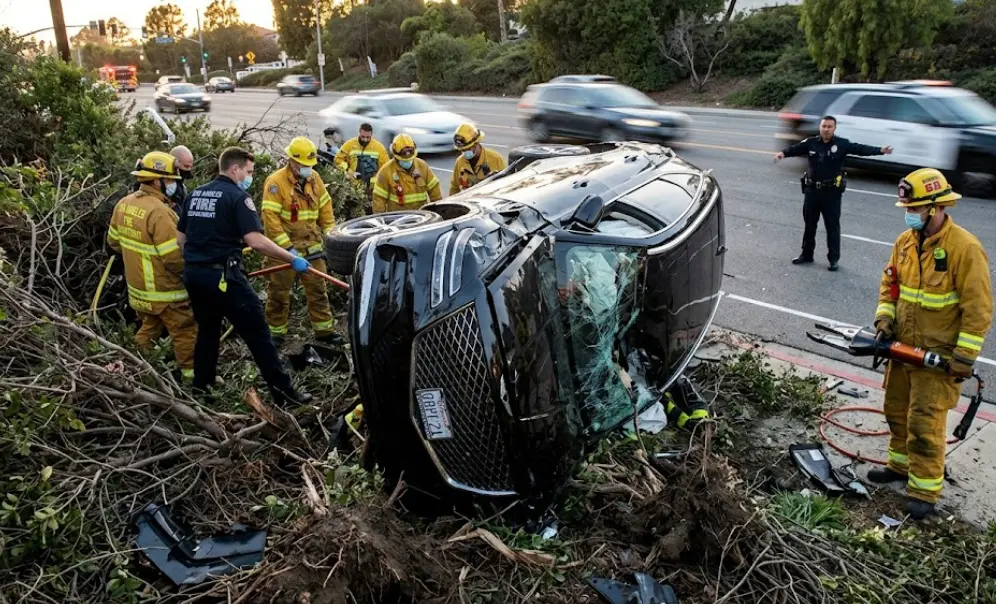
On February 23, 2021, Tiger Woods was in Southern California following the conclusion of the Genesis Invitational, a prestigious PGA Tour event he hosts annually at the Riviera Country Club. Instead of preparing for his next tournament, he was engaged in media obligations. He was scheduled to participate in a television shoot for GolfTV, a commitment that required an early morning drive.
As he navigated the sweeping, downhill stretches of the coastal Los Angeles suburbs, tragedy struck. The tiger woods crash occurred on the border of Rolling Hills Estates and Rancho Palos Verdes, along a notoriously dangerous stretch of Hawthorne Boulevard.
This specific section of the road is heavily sloped and features a sharp curve. It is a well-known accident hotspot, complete with a runaway truck ramp designed for drivers who lose control of their brakes on the steep descent. At approximately 7:12 a.m., Woods’s vehicle struck the raised center median. The heavy SUV then careened across two oncoming lanes of traffic, uprooted a tree, and rolled over several times before finally coming to rest in the brush several hundred feet from the initial point of impact. The sheer violence of the wreck left the vehicle virtually unrecognizable.
The Vehicle and the Lifesaving Safety Features
The vehicle involved in the accident was a 2021 Genesis GV80, a mid-size luxury SUV that Woods was using as a courtesy car for the duration of the Genesis Invitational. In the immediate aftermath, automotive experts and law enforcement officials alike marveled at the structural integrity of the vehicle. Los Angeles County Sheriff Alex Villanueva later noted that the interior of the SUV remained largely intact, which served as a crucial protective shell.
The deployment of multiple airbags, combined with Woods wearing his seatbelt, provided the vital cushion necessary to survive the immense trauma. If the cabin had collapsed, the tiger woods crash would likely have been a fatal one. Instead, first responders arriving at the chaotic scene found the golfer trapped inside, bleeding and severely injured, but remarkably conscious. Los Angeles County Sheriff’s Deputy Carlos Gonzalez, the first officer on the scene, reported that Woods was calm and lucid, able to identify himself simply as “Tiger.” Firefighters had to pry open the shattered windshield using specialized equipment to safely extricate him from the mangled wreckage before rushing him to the nearest trauma center.
The Devastating Medical Reality
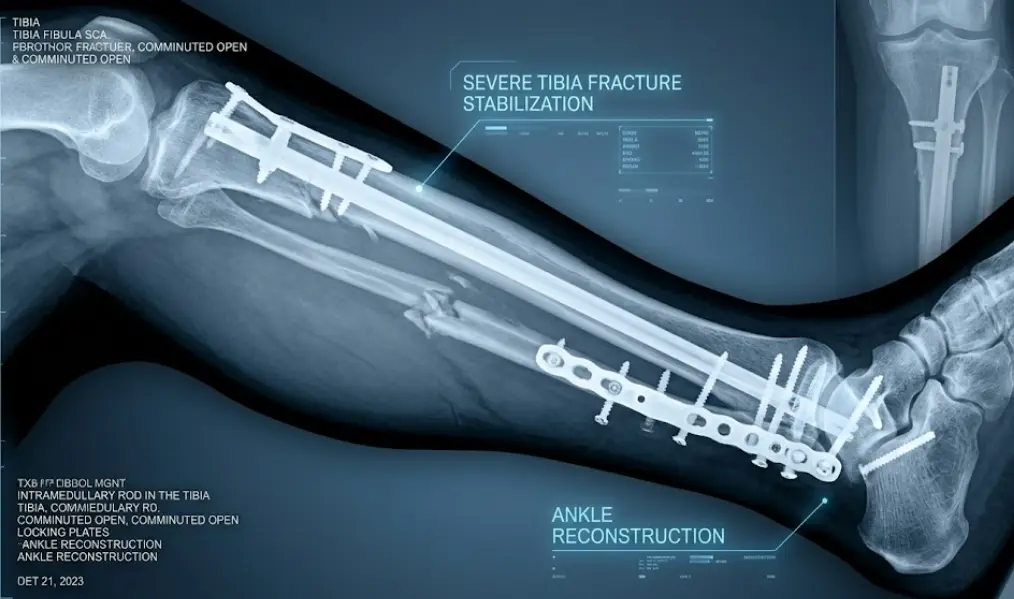
The injuries sustained in the wreck were nothing short of catastrophic. Upon arrival at Harbor-UCLA Medical Center a Level 1 trauma center equipped to handle life-threatening injuries a team of top orthopaedic trauma surgeons rushed him into an emergency operating room. The primary focus was his lower right leg, which had borne the brunt of the crushing impact.
Dr. Anish Mahajan, the hospital’s chief medical officer, released a detailed statement outlining the severity of the trauma. Woods suffered comminuted open fractures to both the upper and lower portions of his right tibia and fibula. This means the bones were shattered into multiple pieces, and the fractures were “open,” meaning the jagged bones had pierced through the skin, exposing the tissue to the outside environment and creating an extremely high risk of severe infection.
To stabilize the leg, surgeons inserted a metal rod straight down the center of his tibia. The injuries did not stop there; his foot and ankle were also severely damaged, requiring a complex combination of screws and pins to hold the shattered bones together. Furthermore, the trauma caused severe swelling within the muscle compartments of his leg. To save the limb from amputation, doctors had to perform a fasciotomy a surgical procedure where the tissue encasing the muscles is cut open to relieve the intense, limb-threatening pressure.
For days following the tiger woods crash, the medical consensus was grim. Renowned orthopedic surgeons across the country weighed in, noting that merely walking properly again would be a monumental challenge, let alone returning to the elite, highly demanding physical arena of professional golf. The sheer amount of metal holding his leg together meant his biomechanics would be permanently altered.
The Extensive Police Investigation
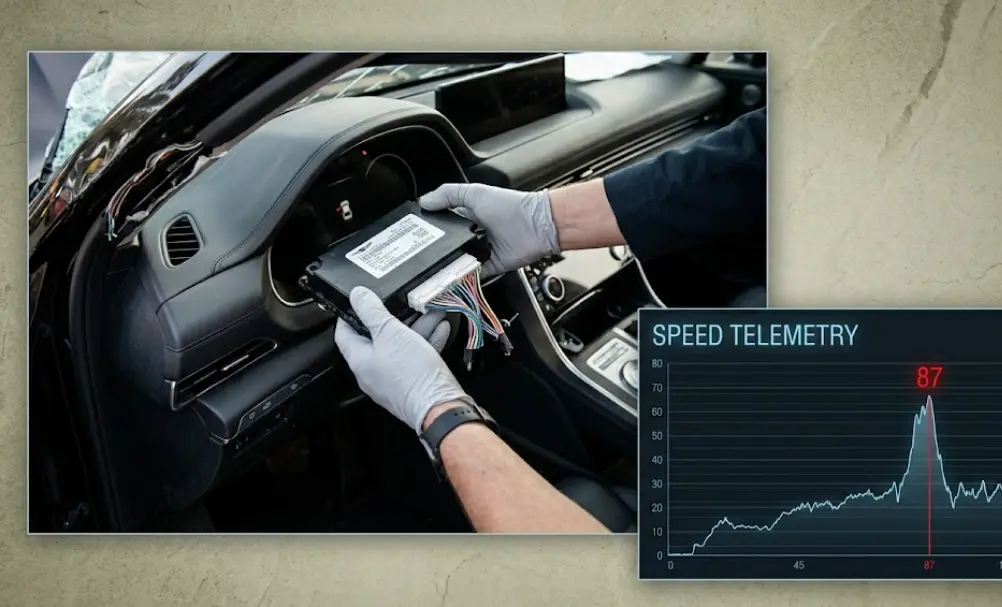
Given Woods’s high profile and his previous, highly publicized vehicle incidents, the Los Angeles County Sheriff’s Department launched a thorough investigation to determine the exact cause of the accident. Detectives secured the “black box” data recorder from the Genesis GV80, which provided precise telemetry regarding the vehicle’s speed, braking, and steering inputs leading up to the impact. For weeks, the public speculated about what could have caused the horrific wreck.
In April 2021, Sheriff Villanueva held a press conference to release the official findings. The data revealed that the primary cause of the tiger woods crash was excessive speed and a subsequent loss of control. Investigators determined that Woods was traveling between 84 and 87 miles per hour in a zone where the posted speed limit was just 45 mph. Furthermore, the data showed no evidence of braking prior to the initial impact with the median.
Instead, the vehicle’s computer registered an acceleration of 99 percent. Detectives theorized that in a moment of panic, Woods inadvertently slammed his foot onto the accelerator rather than the brake pedal. Crucially, the investigation ruled out any impairment. Detectives stated that Woods was not under the influence of drugs or alcohol, he was not using his mobile phone, and no criminal charges or traffic citations were issued, with the department classifying the event as a tragic but “pure accident.”
The Painful Road to Recovery
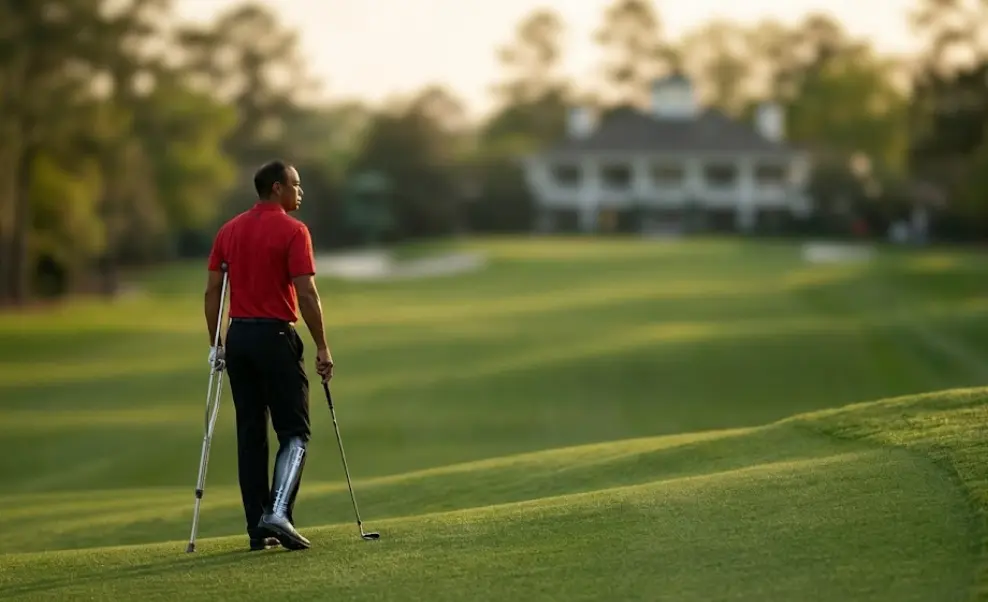
After spending several weeks in Los Angeles hospitals undergoing multiple follow-up procedures, Woods finally returned to his home in Jupiter, Florida, in mid-March 2021. This marked the beginning of what he later described as the most painful and arduous rehabilitation process of his entire life a profound statement coming from a man who had already endured five back surgeries and four knee surgeries. The immediate aftermath of the tiger woods crash confined him to a hospital bed set up in his living room. For months, he was completely non-weight-bearing. He had to rely on a wheelchair, and later crutches, to move around his own house.
His daily routine shifted from perfecting his golf swing to grueling, painful physical therapy sessions designed simply to maintain muscle mass and prevent his severely traumatized joints from freezing up. The psychological toll was immense. Woods admitted in rare interviews that there were dark moments where he genuinely feared he might lose his leg entirely.
The threat of infection remained high for a significant period. However, his legendary work ethic the same drive that propelled him to 15 major championships kicked in. He approached his physical therapy with the singular, obsessive focus of a professional athlete. He celebrated microscopic victories: standing on his own, taking a single step, and eventually walking short distances. The question of playing competitive golf was shelved; the sole focus was gaining a functional quality of life so he could be an active father to his children, Charlie and Sam.
The Global Reaction and Outpouring of Support
The sports universe did not wait for official medical updates to express their profound concern and support. Immediately following the breaking news, social media platforms were inundated with prayers and well-wishes from fellow athletes, celebrities, and global leaders. Former US Presidents Barack Obama and Donald Trump both issued statements praying for his recovery. Inside the tight-knit world of professional golf, the reaction to the tiger woods crash was one of overwhelming sorrow and solidarity. Players like Rory McIlroy, Justin Thomas, and Jon Rahm appeared visibly shaken during press conferences when asked about their friend and idol.
In a powerful display of unity, the following weekend at the WGC-Workday Championship in Florida, dozens of PGA Tour players, caddies, and groundskeepers showed up on Sunday wearing Woods’s signature final-round attire: a red shirt and black trousers.
When Woods, lying in his hospital bed in California, saw the television coverage of his peers wearing his colors, he tweeted that it touched him deeply and helped carry him through a very dark time. It was a poignant reminder of his unparalleled impact on the game of golf. He was not just a competitor to these players; he was the reason many of them had picked up a golf club in the first place. The global outpouring reinforced the idea that his legacy was secure, regardless of whether he ever swung a club again.
Contextualizing a History of Physical Resilience
To truly understand the gravity of his recovery, one must look at the history of his body. Tiger Woods is no stranger to the operating table. His ferocious, violent golf swing the same swing that revolutionized the sport and brought him 82 PGA Tour victories took a massive toll on his anatomy over the decades. He famously won the 2008 US Open at Torrey Pines on a broken leg and a torn ACL, a feat of pain tolerance that remains legendary. He then endured a dark period of debilitating back pain, undergoing four back surgeries, including a spinal fusion in 2017 that many believed would end his career.
He conquered that physical mountain to win the 2019 Masters, capping off what is widely considered the greatest comeback in sports history. However, the injuries sustained in the tiger woods crash were of a completely different magnitude. The previous surgeries were sports-related, meant to repair wear and tear. The injuries from the car accident were the result of blunt force trauma.
Orthopedic experts noted that recovering from a fused spine to play golf is incredibly difficult, but recovering from a shattered tibia, fibula, and reconstructed ankle to walk the undulating hills of a golf course for four consecutive days borders on the miraculous. His history of overcoming physical adversity provided a glimmer of hope for his fans, but even the most optimistic observers acknowledged that this mountain might be too steep to climb.
The Impossible Return to Competitive Golf
Against all medical odds and logical expectations, Tiger Woods refused to let a car accident dictate the end of his career. In late 2021, a mere nine months after nearly losing his leg, a three-second video surfaced on his social media showing him hitting a golf ball with the caption, “Making progress.” The internet exploded. By December 2021, he made a shocking, emotional return to the golf course, playing alongside his son Charlie at the PNC Championship.
While he used a golf cart to navigate the flat terrain of the Ritz-Carlton Golf Club in Orlando, his swing looked remarkably fluid. However, he was quick to temper expectations, stating that playing “hit-and-giggle” golf with his son from a cart was vastly different from the grueling endurance test of a PGA Tour event.
The true test of his recovery following the tiger woods crash came in April 2022. In a move that stunned the sports world, Woods announced he would compete in the Masters Tournament at Augusta National widely considered one of the most physically demanding, hilly courses in the world. Just 14 months after his leg was shattered and pieced back together with metal rods and screws, Woods not only teed it up but remarkably made the cut, shooting an opening-round 71.
Although he limped noticeably by the weekend and faded down the leaderboard, his sheer presence on the course was celebrated as a victory greater than any trophy. It was a profound display of human endurance. He proved to himself and the world that his will to compete remained unbroken, even if his body was forever changed.
Conclusion and the Enduring Legacy
As time goes by, the story of Tiger Woods has undergone a profound transformation. He is no longer merely the young sensation who ruled the sport with unyielding precision, nor is he just the seasoned player who triumphed over his debilitating back issues to secure a remarkable fifth green jacket. He has evolved into a survivor. The legacy of the Tiger Woods crash is indelibly marked in the concluding chapters of his illustrious career. It stands as a stark reminder of his human fragility, yet also as a powerful testament to his extraordinary pain tolerance and mental resilience.
Although he may never again participate in a full PGA Tour season, and his body might demand hours of ice baths and physical therapy just to get ready for a single round of golf, each time he steps onto the course is now seen through a lens of deep appreciation. The accident stripped away the aura of invincibility that once surrounded him, replacing it with a genuine, relatable vulnerability. Golf enthusiasts now observe him not necessarily with the expectation of victory, but simply in awe of the fact that he is able to walk the fairways at all.
His journey from the wreckage in Rancho Palos Verdes to the verdant greens of major championships is a narrative that goes beyond golf. It is a universal story of survival, a testament to the refusal to yield to overwhelming adversity, and the enduring strength of the human spirit to rise, both literally and metaphorically, from the ashes.
Checkout our post About Kristi Noem.