

If you checked Google Trends or Twitter this morning, you probably saw a terrifying name sitting at the top of the list: Hurricane Melissa.
Seeing a hurricane name trending in February,in the middle of winter is enough to make anyone panic. Is there a storm hitting the coast? Is the weather going crazy?
First, take a deep breath. There is no hurricane hitting the United States right now.
The reason Hurricane Melissa is trending today, February 26, 2026, is actually far more shocking than a winter storm. The National Hurricane Center (NHC) has just released its official post-season analysis report, and it contains a bombshell discovery that has stunned scientists, meteorologists, and historians alike.
The report reveals that Hurricane Melissa, which struck Jamaica and the Caribbean back in October 2025, was much, much stronger than we thought. In fact, it has officially been upgraded to a historic monster that ties the record for the strongest Atlantic hurricane of all time.
In this deep-dive article, we are going to break down exactly what the new report says, why Hurricane Melissa is now considered the “Perfect Storm,” and what this terrifying data means for the upcoming 2026 hurricane season.
The Bombshell Report (Why It’s Trending)
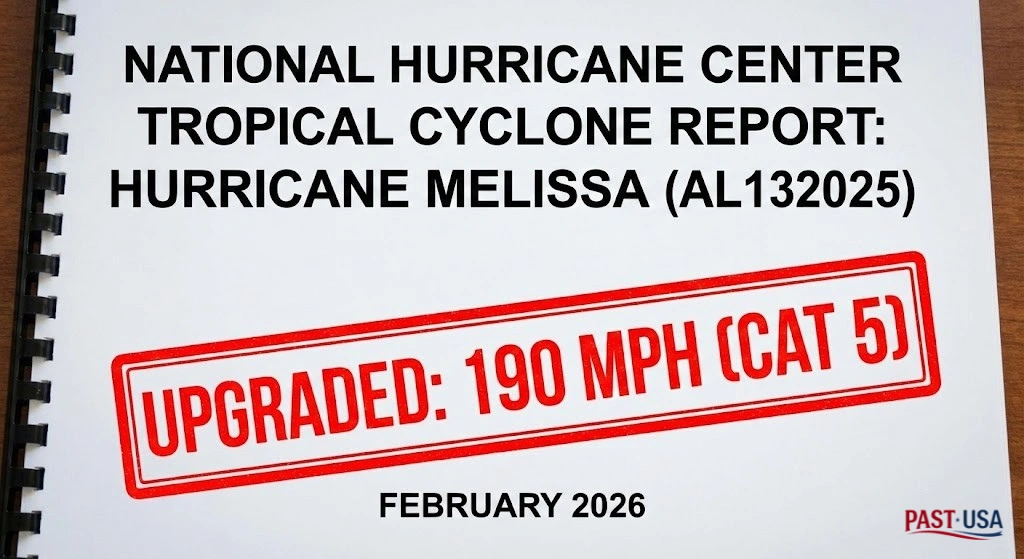
Yesterday afternoon, the National Hurricane Center dropped its final Tropical Cyclone Report for the 2025 season. Usually, these reports are boring technical documents that only weather nerds read. They fix small errors in wind speed or timing.
But this report was different.
After months of analyzing data from “hurricane hunter” aircraft, satellite imagery, and ground sensors, the NHC officially upgraded Hurricane Melissa to a wind speed of 190 mph.
To put that in perspective, a Category 5 hurricane starts at 157 mph. Hurricane Melissa wasn’t just a Category 5; it was a storm that pushed the physical limits of what is possible on Earth.
This upgrade means Hurricane Melissa is now officially tied with Hurricane Allen (1980) as the strongest hurricane ever recorded in the Atlantic Ocean by wind speed. For 46 years, Hurricane Allen stood alone at the top of the record books. Now, Hurricane Melissa has joined it.
This news has caused the name Hurricane Melissa to go viral because it rewrites the history books. It confirms what the people of Jamaica already knew: they survived or tragically, did not survive one of the most powerful natural forces in human history.
The Beast of October 2025
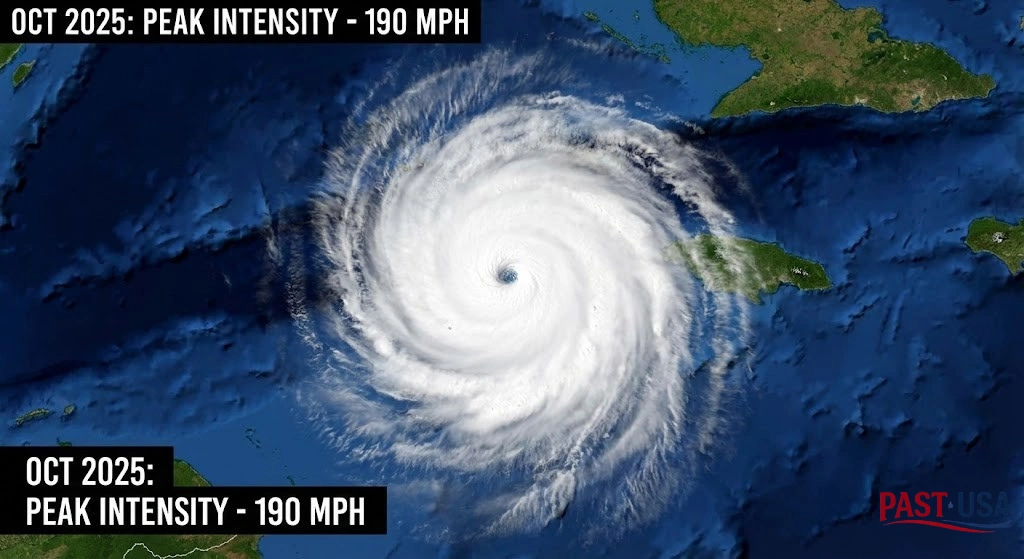
Let’s go back to October 2025. The hurricane season was supposed to be winding down. But late in the month, a tropical wave off the coast of Africa began to organize.
At the time, forecasters were worried, but nobody predicted a record-breaker. As Hurricane Melissa entered the warm waters of the Caribbean, it hit what scientists call “rapid intensification.”
The storm “bombed out.” In just 24 hours, it went from a normal hurricane to a catastrophic monster.
We knew at the time it was bad. But the new data shows it was even worse. The report confirms that the pressure inside the eye of Hurricane Melissa dropped to 892 millibars. In the world of meteorology, lower pressure means a stronger storm. This pressure reading is the third-lowest ever recorded in the Atlantic, tying the legendary 1935 Labor Day Hurricane.
When Hurricane Melissa slammed into the western tip of Jamaica, it wasn’t just a storm; it was a tornado the size of a city. The new analysis shows that even at landfall, the winds were still screaming at 185 mph. This makes it one of the strongest landfalling storms in history, right up there with Hurricane Dorian which destroyed the Bahamas in 2019.
Why Did It Take So Long to Know?
You might be asking: “If Hurricane Melissa was so strong, why didn’t we know this in October?”
This is a great question. Real-time hurricane forecasting is a mix of science and estimation. When a storm is spinning over the ocean, satellites give us a good idea of how strong it is, but they can’t see the exact wind speed at the surface.
To get the truth, we send Hurricane Hunter aircraft into the eye of the storm. These brave pilots and scientists drop small tubes called “dropsondes” into the wind. These tubes measure wind, pressure, and humidity as they fall into the ocean.
During Hurricane Melissa, the data coming from these dropsondes was so extreme that some forecasters thought the instruments might be broken.
One dropsonde recorded a wind gust of 252 mph just above the surface. That is the speed of a Formula 1 car. It was so unbelievable that forecasters were cautious. They estimated the sustained winds at 175 mph or 180 mph in their real-time advisories, which is already catastrophic.
However, after months of reviewing the data and calibrating the instruments, the NHC has confirmed the higher numbers were real. The “conservative” estimate was wrong. Hurricane Melissa was running at full power, 190 mph, making it a meteorological titan.
The Devastation in Jamaica
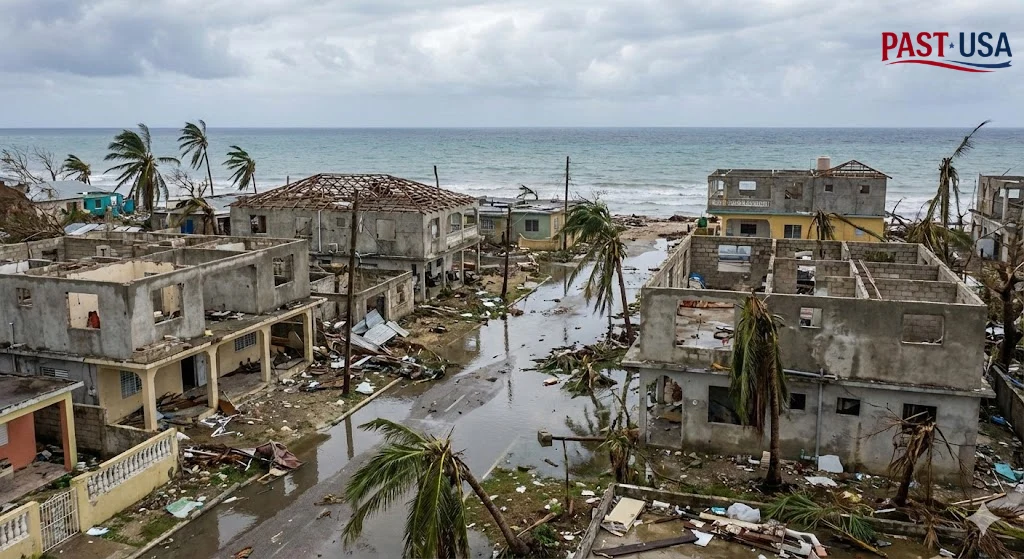
The trending status of Hurricane Melissa is also bringing attention back to the humanitarian crisis it caused. Because the news cycle moves so fast, many people in the US forgot about the destruction in the Caribbean.
The updated report paints a grim picture. Hurricane Melissa is officially blamed for 95 deaths, with 45 of those occurring in Jamaica alone.
The western parishes of Jamaica Westmoreland, Hanover, and St. James were essentially erased. The report details “total structural failure” of concrete buildings. This means that even safe houses built to withstand hurricanes were ripped apart by the 190 mph winds.
The storm surge (the wall of water pushed by the storm) was confirmed to be 20 feet high in some areas. This salt water flooded towns miles inland, destroying crops, contaminating water supplies, and leaving thousands homeless.
For the people of Jamaica, the news that Hurricane Melissa is now a record-breaking storm brings a strange sense of validation. They weren’t just hit by a storm; they were hit by history. The recovery is still ongoing today, four months later, with electricity still not fully restored in some remote mountain villages.
The Climate Change Connection
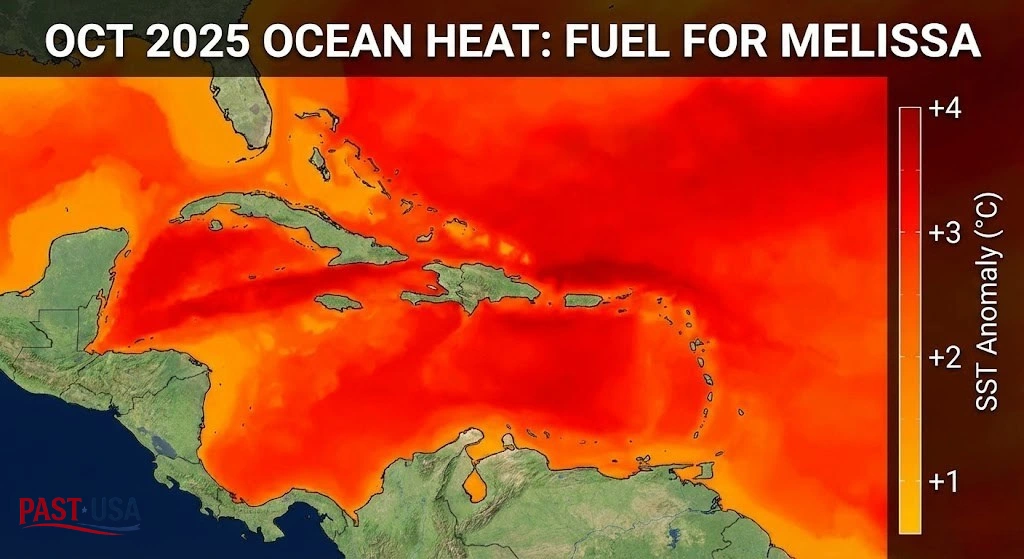
The most controversial and discussed part of the new Hurricane Melissa report is the section on climate change.
The NHC report notes that the water temperatures in the Caribbean in October 2025 were “anomalously high.” The ocean was basically a hot tub, with temperatures hovering around 88degF (31degC).
Hurricanes run on heat. It is their fuel. The hotter the water, the faster the engine spins.
Scientists are pointing to Hurricane Melissa as the ultimate proof that our oceans are storing more energy than ever before. In the past, it was extremely rare for a Category 5 storm to form this late in the season (late October). The waters are usually cooling down by then.
But Hurricane Melissa proved that the rules have changed. The “season” is getting longer, and the ceiling for how strong a storm can get is getting higher.
If Hurricane Melissa had hit 30 years ago, when the oceans were cooler, it might have topped out at 150 mph. But in the super-heated waters of 2025, it found that extra gear to reach 190 mph. This creates a terrifying question: Is a 200 mph hurricane possible? Hurricane Melissa came dangerously close to finding out.
Why This Matters for You (The 2026 Season)
We are currently in February 2026. The next hurricane season officially starts on June 1st. But the news about Hurricane Melissa is a wake-up call for everyone living on the coast, from Texas to Maine.
If a storm like Hurricane Melissa can form in late October and shatter wind records, we need to rethink how we prepare.
The “Rapid Intensification” Nightmare
The scariest thing about Hurricane Melissa was how fast it grew. It went from a tropical storm to a Category 5 in less than two days. This gives people very little time to evacuate.
In 2026, you cannot wait for the news to tell you “it’s definitely coming here.” By the time they know for sure, the storm might already be a monster. You need a “Go Bag” ready in May, not June.
Building Codes Are Not Enough
Most building codes in Florida and the Gulf Coast are designed to withstand winds of 130-150 mph. Hurricane Melissa had winds of 190 mph.
There is almost no residential structure that can survive a direct hit from a storm of that magnitude. This report teaches us that “riding it out” is not an option when a storm like Hurricane Melissa is on the map. You have to leave.
Insurance Rates Will Skyrocket
The financial analysts are reading this report too. The confirmation that Hurricane Melissa was a historic event will likely cause insurance premiums in coastal areas to jump again. Companies are realizing that the risk of a “total loss” event is higher than their old models predicted.
The “Zombie Storm” Theory (Debunked)
Because the internet loves a conspiracy, the trending search for Hurricane Melissa has also sparked some wild rumors.
Some people on TikTok are claiming that Hurricane Melissa is a “Zombie Storm” that has come back to life. This happens sometimes a storm dies, spins around, and reforms.
Let’s be super clear: This is false.
The system that was Hurricane Melissa dissipated (died) completely in November 2025. It is gone. The energy has dispersed into the atmosphere. The “Melissa” trending today is purely about the data, not the weather.
However, the name “Melissa” is on the 2025 list. Since hurricane names rotate every six years, we won’t see another “Tropical Storm Melissa” until 2031 unless the name is retired.
And that is the final piece of news: Because of the death toll and the historic intensity confirmed in this report, it is 99.9% certain that the World Meteorological Organization (WMO) will vote to retire the name Melissa this spring.
This means there will never be another Hurricane Melissa. The storm that hit Jamaica was so bad that the name will be struck from the list out of respect for the victims, just like Katrina, Sandy, and Maria.
Comparison to Other Legends
To understand the magnitude of Hurricane Melissa, we have to look at the club it has just joined.
Only a handful of Atlantic hurricanes have ever terrified scientists this much:
- Hurricane Allen (1980): The previous solo record holder at 190 mph. It roamed the Caribbean like a buzzsaw but luckily weakened before hitting Texas. Hurricane Melissa matched its power but hit land with more ferocity.
- Hurricane Wilma (2005): This storm still holds the record for the lowest pressure ever (882 mb). Hurricane Melissa got close (892 mb), showing just how dense and tight its core was.
- Hurricane Dorian (2019): This storm sat over the Bahamas with 185 mph winds. Hurricane Melissa was strikingly similar a slow-moving, compact drill bit that ground everything in its path to dust.
The fact that we are adding a new name to this list in 2026 is sobering. It reminds us that nature is capable of violence that we can barely comprehend.
What You Should Do Now
So, Hurricane Melissa is trending. You’ve clicked the link, you’ve read the news. What now?
Don’t just scroll past. Let this be your reminder.
- Check Your Insurance: Does your policy cover flood damage? Most don’t. Hurricane Melissa caused massive flooding 10 miles inland.
- Update Your Plan: Talk to your family. If a Cat 5 is coming, where do you go? How do you get there?
- Respect the Water: The ocean temperatures that fueled Hurricane Melissa haven’t cooled down much. 2026 is predicted to be another active year.
Hurricane Melissa may be gone, but the lesson it left behind is trending for a reason. It showed us the new limit of the sky. And in this new climate era, the sky has no limit.
Stay safe, stay informed, and don’t let the weather catch you sleeping.
Summary of Key Facts for the Reader
- Why Trending? NHC released post-storm analysis report.
- New Status: Upgraded to Category 5 (190 mph).
- Records: Tied for strongest Atlantic hurricane ever (with Hurricane Allen).
- Current Location: Dissipated (Not active).
- Main Impact: Jamaica (October 2025).
- Next Hurricane Season: Starts June 1, 2026.
Don’t forget to checkout our post about The NBA Star Caitlin Clark.

Pingback: Stanley Tucci, Hilary Knight, and the White House Invite