
Welcome to the most comprehensive, deeply researched, and authoritative guide available for the 2026 Winter Paralympics. Scheduled to unfold against the breathtaking backdrop of the Italian Alps and the vibrant cityscape of Milan, this highly anticipated global event represents much more than a mere sporting competition.
It is a monumental celebration of human resilience, technological innovation, and absolute athletic mastery. As elite competitors from around the globe prepare to descend upon Northern Italy, international audiences are eagerly anticipating what is universally expected to be an unforgettable showcase of adaptive winter sports. Whether you are a dedicated follower of parasports, a first-time viewer, or a sports enthusiast looking to understand the mechanics of these incredible disciplines, this extensive article will provide you with every detail you need to know about the upcoming Milano Cortina edition.
The 2026 Winter Paralympics mark a historic milestone: the 50th anniversary of the very first winter edition, which was held in 1976 in Ornskoldsvik, Sweden. Half a century of progress has transformed this movement from a small gathering of dedicated pioneers into a massive, highly broadcasted global phenomenon. Returning to Italian snow and ice twenty years after the widely praised Torino 2006 games, the Milano Cortina organizing committee is set to elevate the standard of international adaptive competitions to unprecedented heights.
This edition will showcase state-of-the-art facilities, groundbreaking accessibility initiatives, and a profound commitment to leaving a lasting social legacy in the host country.
Dates and Venues of the 2026 Winter Paralympics
The official competition dates for the 2026 Winter Paralympics are locked in from March 6 to March 15, 2026. Over the course of these ten action-packed days, the world will witness spectacular opening and closing ceremonies, alongside fierce battles for the podium across multiple high-stakes disciplines. Fans can expect non-stop daily action, with events scheduled throughout the European daytime and evening hours, ensuring maximum visibility for international broadcasters and thrilling daytime attendance for local fans.
A unique, defining feature of the 2026 Winter Paralympics is its incredibly widespread geographical footprint. Unlike past games that were largely confined to a single, centralized host city, this Italian edition embraces an innovative regional approach. The organizing committee has spread the joy, the infrastructure upgrades, and the economic benefits across a vast area of Northern Italy. The event encompasses the regions of Lombardy, Veneto, and the Autonomous Province of Trento, tying together metropolitan hubs and isolated mountain paradises.
The prestigious Opening Ceremony will be held on the evening of Friday, March 6, at the iconic Verona Arena. This historic Roman amphitheatre has been specially retrofitted to ensure total accessibility for all attendees and participants, merging ancient architecture with modern inclusivity. Meanwhile, the Closing Ceremony will take place on March 15 at the Cortina Curling Olympic Stadium, a venue rich in history, having originally been built for the 1956 Olympic Games.
The competitive venues are beautifully integrated into their natural and urban environments. Milano will serve as the premier hub for ice-based sports, utilizing the newly constructed Milano Santagiulia Ice Hockey Arena. Cortina d’Ampezzo, affectionately known as the “Queen of the Dolomites,” will host the high-speed thrill of downhill events and snowboard cross. Val di Fiemme and Tesero will act as the stunning backdrops for the grueling endurance tests of Nordic skiing and biathlon.
The Six Thrilling Sports of the 2026 Winter Paralympics
At the core of the 2026 Winter Paralympics, you will find six incredibly demanding primary sports, offering a grand total of 79 highly coveted medal events. This carefully curated selection demands a mixture of high-speed fearlessness, immense cardiovascular endurance, and strategic, precision-based teamwork.
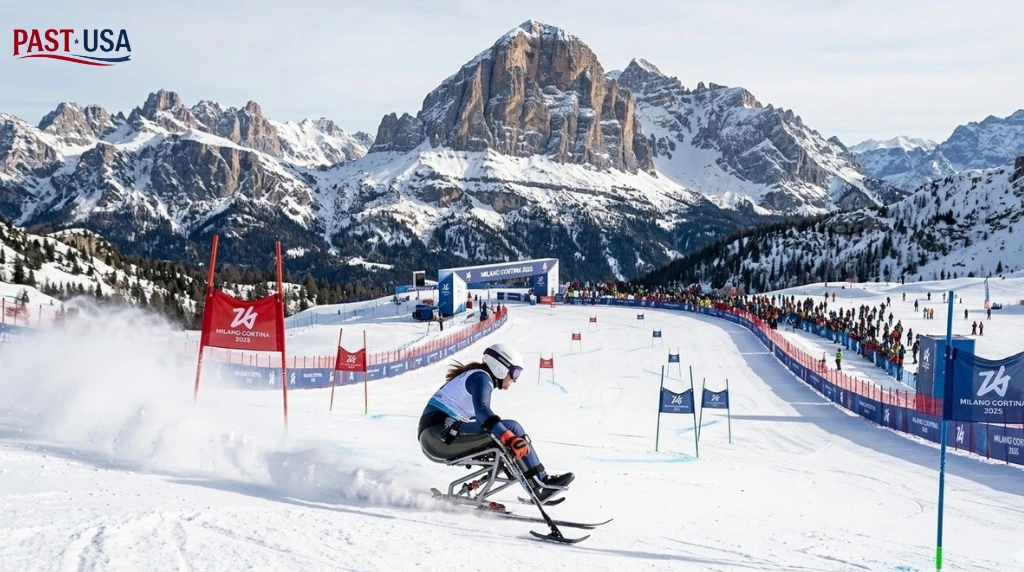
- Para Alpine Skiing: Taking place on the legendary slopes of the Tofane Alpine Skiing Centre in Cortina, this sport features some of the fastest non-motorized speeds recorded by human beings. Athletes compete in five distinct disciplines: Downhill, Super-G, Giant Slalom, Slalom, and Super Combined. The competitors are divided into three major categories sitting, standing, and visually impaired. Athletes with visual impairments race down the treacherous mountain at over 100 kilometers per hour, relying entirely on the verbal cues of their sighted guides via headset radios. Sit-skiers utilize custom-molded mono-skis equipped with state-of-the-art shock absorbers, leaning their entire body weight into razor-thin turns to shave fractions of a second off their times.
- Para Biathlon: Combining the exhausting physical toll of cross-country skiing with the zen-like focus of target shooting, biathlon is a supreme test of physical regulation. Athletes must ski aggressively to beat the clock, then abruptly halt, lower their heart rates, and shoot at targets placed 10 meters away. A missed shot results in either a time penalty or a mandatory penalty loop, drastically altering the leaderboard in seconds. Visually impaired athletes participate using cutting-edge acoustic rifles; the weapon emits a continuous tone that raises in pitch as the aim centers perfectly on the target, requiring immense auditory focus amidst the roaring crowds.
- Para Cross-Country Skiing: Hosted in the scenic Tesero Cross-Country Skiing Stadium, this discipline pushes the human cardiovascular system to its absolute limits. Ranging from high-octane short sprints to agonizingly long-distance marathons (up to 20 kilometers), athletes power through the snow using sit-skis or standing techniques. The relay events, particularly the open and mixed relays, are crowd favorites, requiring deep strategic planning by the national coaches to balance their teams according to the complex percentage handicap system that ensures fair racing across different impairment classifications.
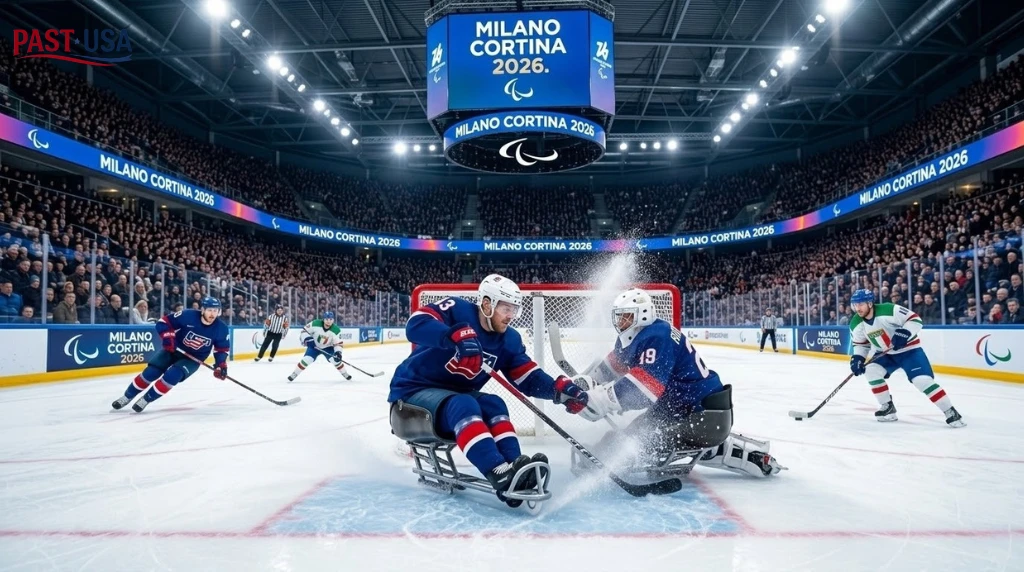
- Para Ice Hockey: Formerly known as sled hockey, this is arguably the most fiercely physical and fast-paced sport on the roster. Played at the Milano Santagiulia Ice Hockey Arena, athletes propel themselves across the ice using two shortened sticks equipped with metal picks on one end for propulsion and curved blades on the other for handling the puck. The hits are brutal, the checking is relentless, and the upper-body strength required to maneuver, shoot, and defend is staggering. The United States team enters the tournament as massive favorites, seeking to extend an unprecedented dynasty of consecutive gold medals.
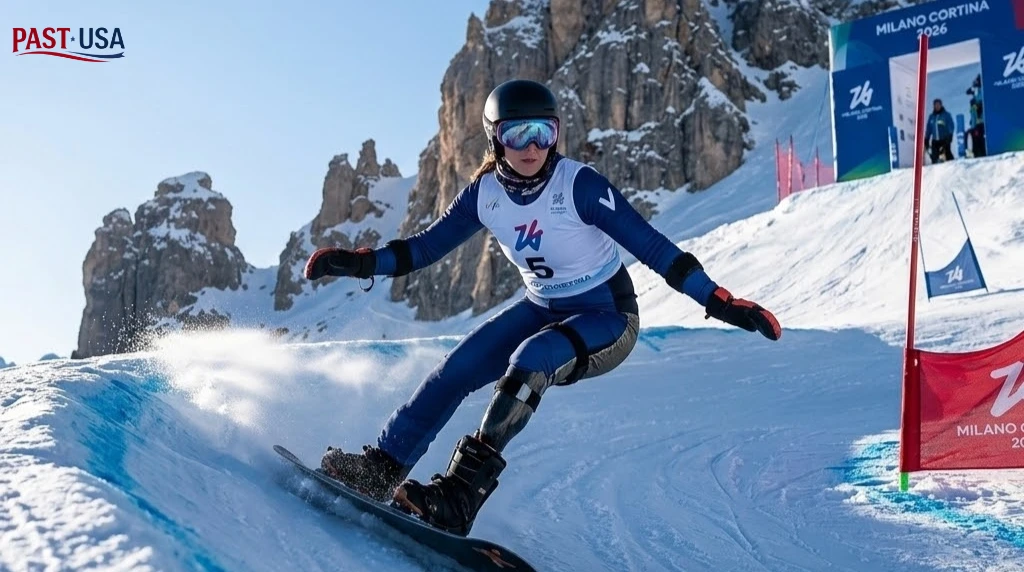
- Para Snowboard: Since its highly successful debut at the Sochi 2014 games, snowboard has injected a massive dose of youthful, extreme-sports energy into the schedule. At the Cortina Para Snowboard Park, athletes with physical impairments affecting their upper or lower limbs will compete in two adrenaline-fueled formats: Snowboard Cross and Banked Slalom. Snowboard Cross involves athletes racing head-to-head down a steep course littered with jumps, rollers, and sharp banked turns, where a single mistake can lead to a massive wipeout. Banked Slalom is a solitary race against the clock through a winding, technical course that demands perfect edge control.
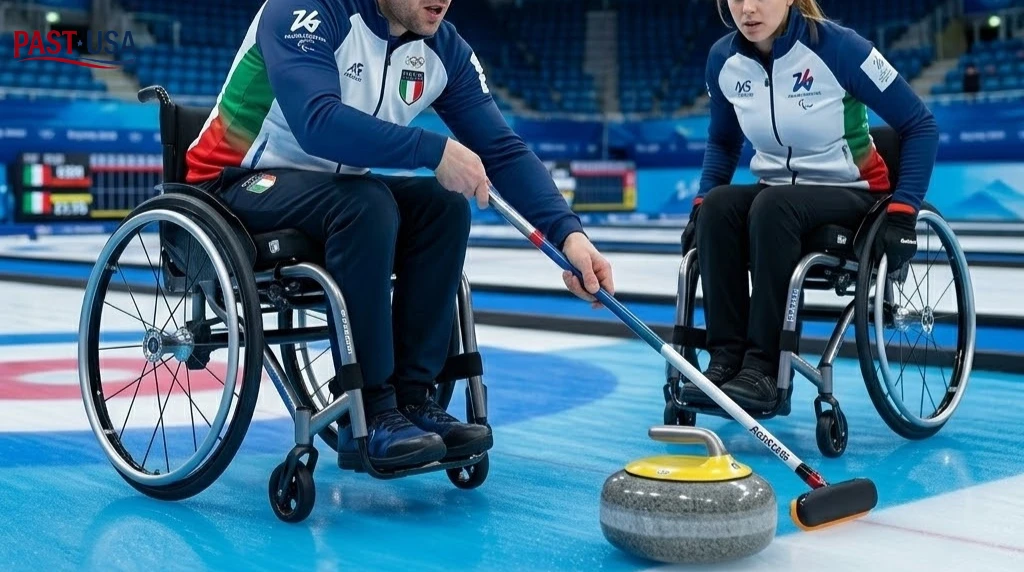
- Wheelchair Curling: Making a highly anticipated new addition at the 2026 Winter Paralympics is the mixed doubles wheelchair curling event, which joins the traditional mixed team tournament. Held at the Cortina Curling Olympic Stadium, this sport is colloquially known as “chess on ice.” It requires extraordinary tactical foresight, precise communication, and immense upper-body touch. Unlike able-bodied curling, there is no sweeping allowed to alter the stone’s trajectory after it is released. The thrower must calculate the exact weight, rotation, and line of the 44-pound granite stone using a specialized delivery stick, making it a game of microscopic margins and extreme psychological pressure.
Record-Breaking Athlete Participation at the 2026 Winter Paralympics
The 2026 Winter Paralympics will host an estimated 665 elite athletes representing more than 50 National Paralympic Committees. This staggering attendance makes it the most universally represented and heavily contested winter edition in the entire history of the movement. The organizing committee and the International Paralympic Committee (IPC) have worked tirelessly to expand the global reach of winter parasports, utilizing grassroots funding and mobility programs to bring competitors from nations that have never previously fielded winter delegations.
Furthermore, this edition is proudly shattering gender participation records. For the fourth consecutive cycle, a record number of female competitors will take to the snow and ice. Current projections show a massive 18 percent increase in female athletes compared to the Beijing 2022 games, with sports like alpine skiing and cross-country boasting their deepest and most talented women’s fields ever.
Heavyweight nations like China, Team USA, and host nation Italy are sending massive, highly funded delegations to the 2026 Winter Paralympics. China, having topped the medal table for the first time in Beijing, is sending a formidable squad of over 70 athletes, determined to prove their dominance was not a one-time home-turf anomaly. Team USA follows closely behind, bringing legendary veterans like sled hockey superstar Declan Farmer and Nordic skiing powerhouse Jake Adicoff. Meanwhile, the Italian host team, fueled by the passionate home crowd, is fielding its largest-ever delegation of 42 competitors, with stars like alpine skier Rene De Silvestro hungry for gold on familiar slopes.
The Mascot of the 2026 Winter Paralympics
The official mascot of the 2026 Winter Paralympics is Milo, an endlessly energetic and deeply inspiring brown stoat. Following a massive public online vote that engaged millions of Italian citizens and international fans, Milo and his sister Tina (the Olympic mascot) were chosen to represent the heart and soul of the Milano Cortina experience. Their names playfully derive from the two main host cities, weaving local geography directly into their identities.
Milo is not just a cute face; he represents the very essence of the adaptive sports movement. The character’s backstory establishes that he was born without one of his hind legs. Instead of letting this hinder his love for the mountains, Milo ingeniously learned to use his bushy tail as a makeshift leg, allowing him to navigate the treacherous snowy terrain with incredible agility. He stands as a symbol of ingenuity, unwavering willpower, and the creative problem-solving that defines everyday life for people with disabilities.
Milo’s lively presence is deeply integrated into the overarching visual identity of the event, known as the “Look of the Games.” This design language is rooted in Italian gestures and cultural expressions, specifically focusing on five core “Vibes”: Creativity, Energy, Imagination, Passion, and Style. These concepts will be splashed across every banner, ticket, and broadcast graphic, creating a cohesive, deeply Italian aesthetic that visually unifies the widespread venues.
Legacy and Accessibility of the 2026 Winter Paralympics
Organizers of the 2026 Winter Paralympics have prioritized universal design and long-term sustainability from the very first day of the bidding process. The International Paralympic Committee demands that host cities not only provide an elite sporting arena but also use the immense spotlight of the games to drive permanent, systemic improvements in local accessibility and social inclusion.
The three primary Paralympic Villages located in Milano, Predazzo, and Cortina have been constructed or heavily retrofitted to exceed global barrier-free standards. Wide corridors, tactile paving for the visually impaired, lowered communal amenities, and fully accessible transport loops ensure that athletes can focus entirely on their performance rather than logistical hurdles. Crucially, the massive central Olympic Village in Milan is designed with a profound post-games legacy in mind. Once the closing ceremony concludes, this sprawling complex will not be left to decay; it will be rapidly converted into highly needed, fully accessible student housing and affordable residential apartments, fundamentally upgrading the city’s housing infrastructure.
During the competitions, critical technical support will be managed by Ottobock, a global leader in prosthetics and mobility devices. They are deploying an international team of 86 highly trained orthotists, prosthetists, wheelchair technicians, and specialized welders. Operating massive repair centers in the villages and rapid-response emergency workshops at all six competition venues, this team ensures that catastrophic equipment failures do not end an athlete’s dream prematurely.
How to Watch the 2026 Winter Paralympics Live
Broadcasting this global sporting event is a monumental logistical undertaking designed to reach the widest possible international audience. In Europe, the European Broadcasting Union (EBU) has secured exclusive media rights, ensuring that millions of fans across the continent can enjoy unprecedented free-to-air coverage through their national public service broadcasters, as well as via the Eurovision Sport free streaming platform. This commitment to removing paywalls guarantees that the inspiring stories of these athletes will reach every living room.
In the United States, NBCUniversal and its streaming platform Peacock will provide comprehensive, round-the-clock coverage, including live streams of every single medal event, highly produced athlete profile documentaries, and prime-time highlight packages. For those fortunate enough to travel to Italy, the ticketing strategy has been specifically designed to ensure packed stadiums and a roaring atmosphere. In a massive push for accessibility and family inclusion, tickets start at an incredibly affordable 10 Euros for children under 14, with nearly 90 percent of all available tickets priced under 35 Euros.
Conclusion
The 2026 Winter Paralympics promise to be a historic celebration of human spirit, pushing the boundaries of what is athletically possible on snow and ice. From the rapid descents in Cortina to the strategic brilliance displayed on the ice in Milan, the upcoming games will undoubtedly captivate millions. By prioritizing accessibility, celebrating international unity, and embracing the vibrant Italian culture, Milano Cortina is setting a gold standard for the future of adaptive sports.
Checkout the viral post about Jim Carrey’s clonning Conspiracy.