
If you have been glued to your screens this past week, you know that 2026 Winter Olympics alpine skiing has been nothing short of a cinematic thriller. We are officially halfway through the alpine program, and the script has been flipped in ways no analyst predicted. As the sun rises over the Dolomites this Sunday morning, the search term “2026 Winter Olympics alpine skiing” is trending nationwide in the USA, and for good reason: the drama is palpable, the ice is unforgiving, and the redemption arcs are just beginning.
From the terrifying vertical drops of Bormio’s Stelvio course to the sun-drenched, deceptive curves of Cortina’s Olimpia delle Tofane, these Games have already crowned new kings and queens while leaving legends searching for answers. Whether you are a die-hard ski racing fan or just tuning in for the prime-time glory, here is the definitive deep-dive into the chaos, the triumphs, and the unmissable final days of competition.
A Games of Shockwaves
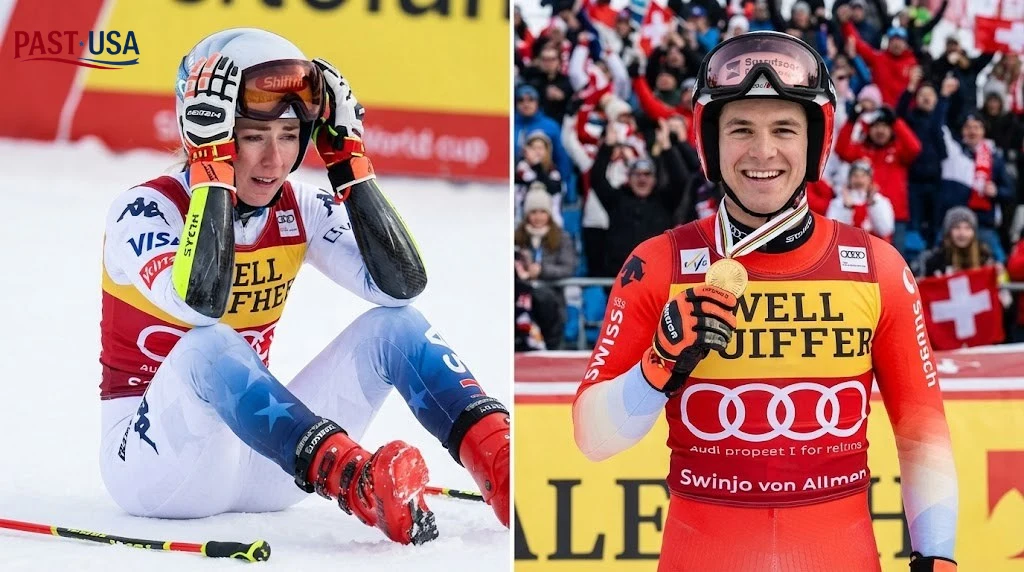
The headline dominating the 2026 Winter Olympics alpine skiing news cycle is undoubtedly the unexpected struggle of the American superstar, Mikaela Shiffrin. Coming into these Games as the heavy favorite to sweep the technical events, Shiffrin’s performance in the Team Combined a new format for 2026 left the world stunned.
Paired with speed specialist Breezy Johnson, the duo finished a heartbreaking fourth, missing the podium by fractions of a second. Shiffrin, usually a machine of precision in the slalom, looked uncharacteristically rattled on the Tofane ice, posting only the 15th fastest slalom time in the combined event.
“I didn’t find my comfort level,” Shiffrin admitted in a tearful post-race interview that has since gone viral. “The snow here is aggressive, and if you hesitate for a millisecond, it eats you alive.”
But where one star flickers, another ignites. The story of the men’s speed events has been the absolute dominance of the Swiss wonder-kid, Franjo von Allmen. In a shocking double-gold performance, Von Allmen conquered both the Downhill and the Super-G on the notorious Stelvio piste in Bormio. He denied the Italian home favorites and the American challengers alike, cementing his name as the breakout star of 2026 Winter Olympics alpine skiing.
A Tale of Two Cities (and Two Monsters)
To understand why these results are so chaotic, you have to understand the dirt or rather, the ice under the skis. The organizers split the 2026 Winter Olympics alpine skiing venues between two iconic, yet distinct, locations: Bormio for the men and Cortina d’Ampezzo for the women.
The Beast of Bormio: The Stelvio
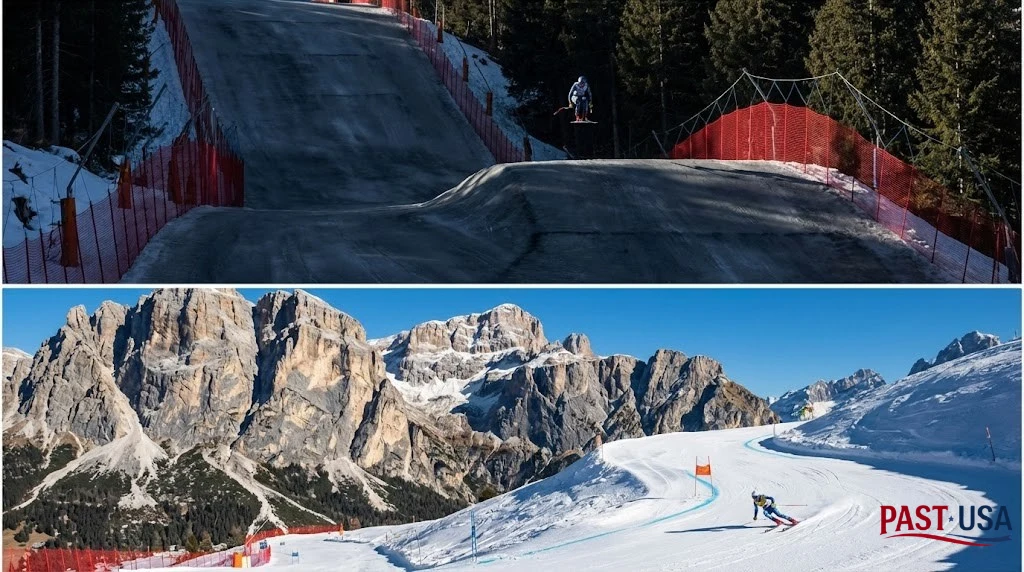
For the men, the Stelvio course has lived up to its reputation as the most punishing track on the Olympic circuit. It is dark, bumpy, and incredibly steep. The “San Pietro” jump has already claimed several victims, launching skiers nearly 40 meters into the air before slamming them back onto rattled, injected ice. This is where Marco Odermatt’s quest for gold hit a wall literally. The Swiss favorite managed a silver in the Giant Slalom but was edged out by Brazil’s Lucas Pinheiro Braathen in a result that sent shockwaves through the sport.
The Beauty of Cortina: Olimpia delle Tofane
On the women’s side, the Tofane course offers a different kind of danger. It is visually stunning, flanked by massive limestone cliffs, but the technical layout is deceptive. The “Scarpadon” section has been the decisive factor in the 2026 Winter Olympics alpine skiing speed events. It was here that Italy’s own Federica Brignone mastered the line to take gold in the Super-G, sending the home crowd into a frenzy that reportedly registered on local seismographs.
The New Format
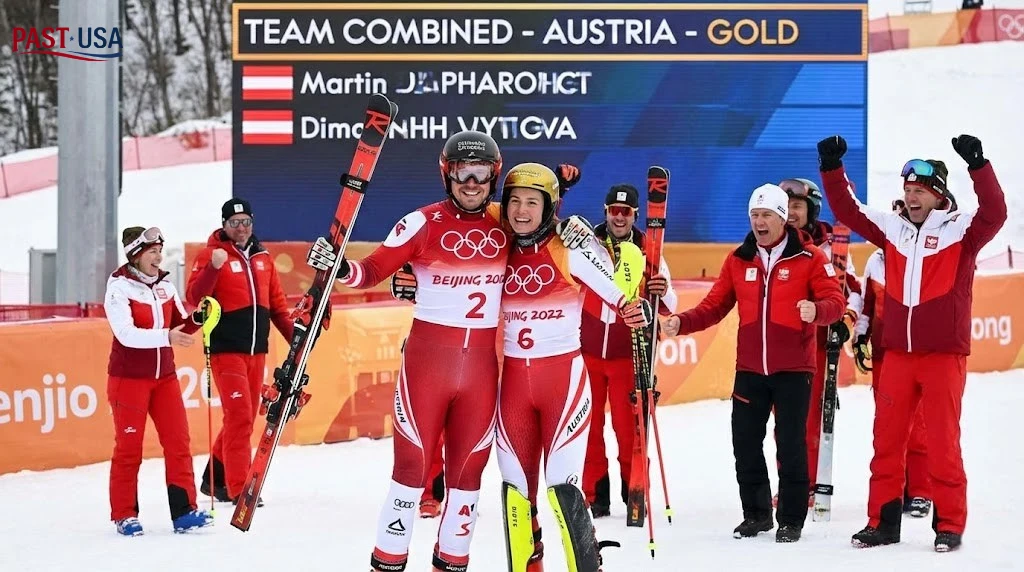
One of the most talked-about changes to the 2026 Winter Olympics alpine skiing schedule was the introduction of the Team Combined event, replacing the individual Alpine Combined. The format pairs a downhill specialist with a slalom specialist from the same country, adding a layer of team strategy rarely seen in this individual sport.
The result? Absolute carnage and brilliant television.
In the women’s event, Austria’s duo of Ariane Radler and Katharina Huber took gold, proving that consistency beats raw star power. The format forced speed skiers to watch helplessly as their technical partners navigated the slalom gates, creating tension-filled finish areas that captured the true emotional highs and lows of the Olympics. Critics who argued the combined event was dying have been silenced; the team element has injected new life and national pride into the discipline.
The Tech Revolution
If the athletes look faster this year, it is because the technology supporting them has taken a quantum leap. 2026 Winter Olympics alpine skiing is the first to fully utilize LiDAR (Light Detection and Ranging) scanning for daily course preparation.
Before every race, drones scan the course to create a millimeter-accurate 3D map. This allows course setters to place gates in positions that maximize speed while maintaining safety, and it gives broadcasters the ability to show “ghost runs” live on TV, comparing current skiers to the leader in real-time with frightening accuracy.
Furthermore, the snow itself is engineered. Faced with warm winters, organizers in Bormio and Cortina have utilized advanced “snow injection” bars that inject water deep into the snowpack, freezing it into a solid, consistent block of ice from the bottom up. While this ensures the course holds up for the 50th racer, it also means the surface is as hard as concrete, punishing even the slightest error. This “smart snow” technology is a major reason why we are seeing such high rates of “DNF” (Did Not Finish) in the technical events the grip is relentless.
What to Watch Next
We are now entering the final stretch. If you are searching for the schedule for 2026 Winter Olympics alpine skiing, here is what you need to know for the coming days.
The Men’s Slalom (February 16)
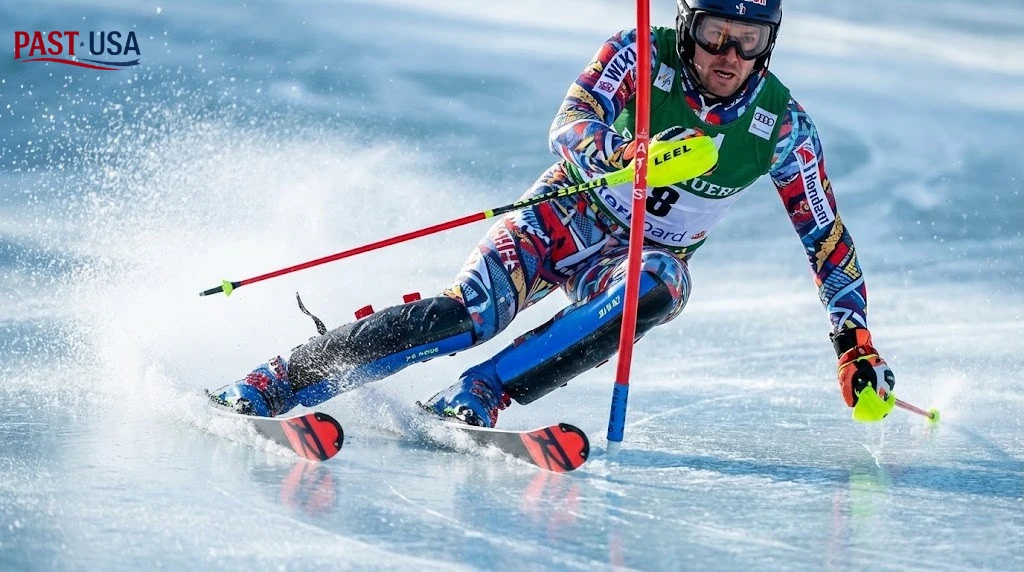
All eyes will return to Bormio for the Men’s Slalom. The narrative here is simple: Can anyone stop the Braathen-McGrath Norwegian dominance? Lucas Pinheiro Braathen, freshly minted Giant Slalom gold medalist for Brazil (having switched nationalities from Norway), is skiing with a flair and freedom that is mesmerizing to watch. However, the icy Stelvio slalom hill is tight and steep, favoring technical technicians like France’s Clement Noel.
The Women’s Slalom (February 18)
This is the big one. The final event of the women’s program. This is Mikaela Shiffrin’s last stand at these Games. After the disappointment in the combined and a solid but non-medal finish in the Giant Slalom (won by a surging Lara Gut-Behrami), the Slalom is Shiffrin’s kingdom. She has won more World Cup slaloms than anyone in history.
The pressure will be suffocating. A gold here would salvage her Olympics and cement her GOAT status. A loss would feed the critics who claim she struggles on the biggest stage. It is the must-watch event of the entire 2026 Winter Olympics alpine skiing calendar.
The Italian Job
We cannot discuss these Games without acknowledging the host nation. Italy has shown up. With Sofia Goggia taking bronze in the Downhill despite a fractured hand earlier in the season, and Federica Brignone winning the Super-G, the “Azzurre” have delivered.
The atmosphere in Cortina is electric. Fans are lining the course in thousands, ringing cowbells and chanting “Italia!” It serves as a reminder of why the Winter Games belong in the Alps. The passion for 2026 Winter Olympics alpine skiing here is not just a pastime; it is a religion.
Key Takeaways for the Casual Viewer
If you are just tuning in now, here are the talking points to sound like an expert at the water cooler:
- Franjo von Allmen is the new King of Speed: The young Swiss skier is the breakout star.
- The courses are bulletproof ice: Expect skiers to struggle for grip; it’s not bad skiing, it’s brutal conditions.
- Shiffrin’s Redemption Arc is active: Tune in on Wednesday, Feb 18, for the Women’s Slalom. It will be historic either way.
- Team Combined is a hit: The new format is likely here to stay.
Conclusion
As we pivot to the final technical events, the 2026 Winter Olympics alpine skiing saga is far from over. The speed events gave us adrenaline and terror; the technical events will give us precision and nerve.
Will Shiffrin find her rhythm? Will the Italian men finally match their women’s success on home snow? Can Braathen grab a second gold for Brazil? The answers lie on the icy slopes of Bormio and Cortina.
Don’t blink. The fastest show on snow is about to reach its climax.
FAQs
Q: Where are the alpine skiing events being held ?
The men’s events are in Bormio on the Stelvio course, and the women’s events are in Cortina d’Ampezzo on the Olimpia delle Tofane course.
Q: Who has won the most medals so far in 2026 Winter Olympics Alpine Skiing?
Switzerland is currently leading the alpine medal table, driven by Franjo von Allmen’s double gold in speed events in 2026 Winter Olympics Alpine Skiing.
Q: How can I watch the remaining races of 2026 Winter Olympics Alpine Skiing?
In the USA, coverage is live on NBC and streaming on Peacock. The Men’s Slalom is on Feb 16, and the Women’s Slalom is on Feb 18.
Q: Why is Mikaela Shiffrin struggling in 2026 Winter Olympics Alpine Skiing?
Shiffrin has cited an inability to find her “comfort level” on the aggressive, injected snow in Cortina, particularly in the new Team Combined format at 2026 Winter Olympics Alpine Skiing.
Read About Valentines Day.


Pingback: Robert Duvall Dead at 95: A Tribute to the "Godfather" Icon